How Abu Dhabi is revealing the roots of the UAE’s global outlook
The Gulf has sometimes been portrayed in the West as, until recently, a remote corner of the world, a place defined largely by its desert environment and the relative isolation of its communities. Two new exhibitions in Abu Dhabi museums suggest a different and more compelling account of the history of the region, namely, that far from being a peripheral place, the Gulf was a crossroads of…
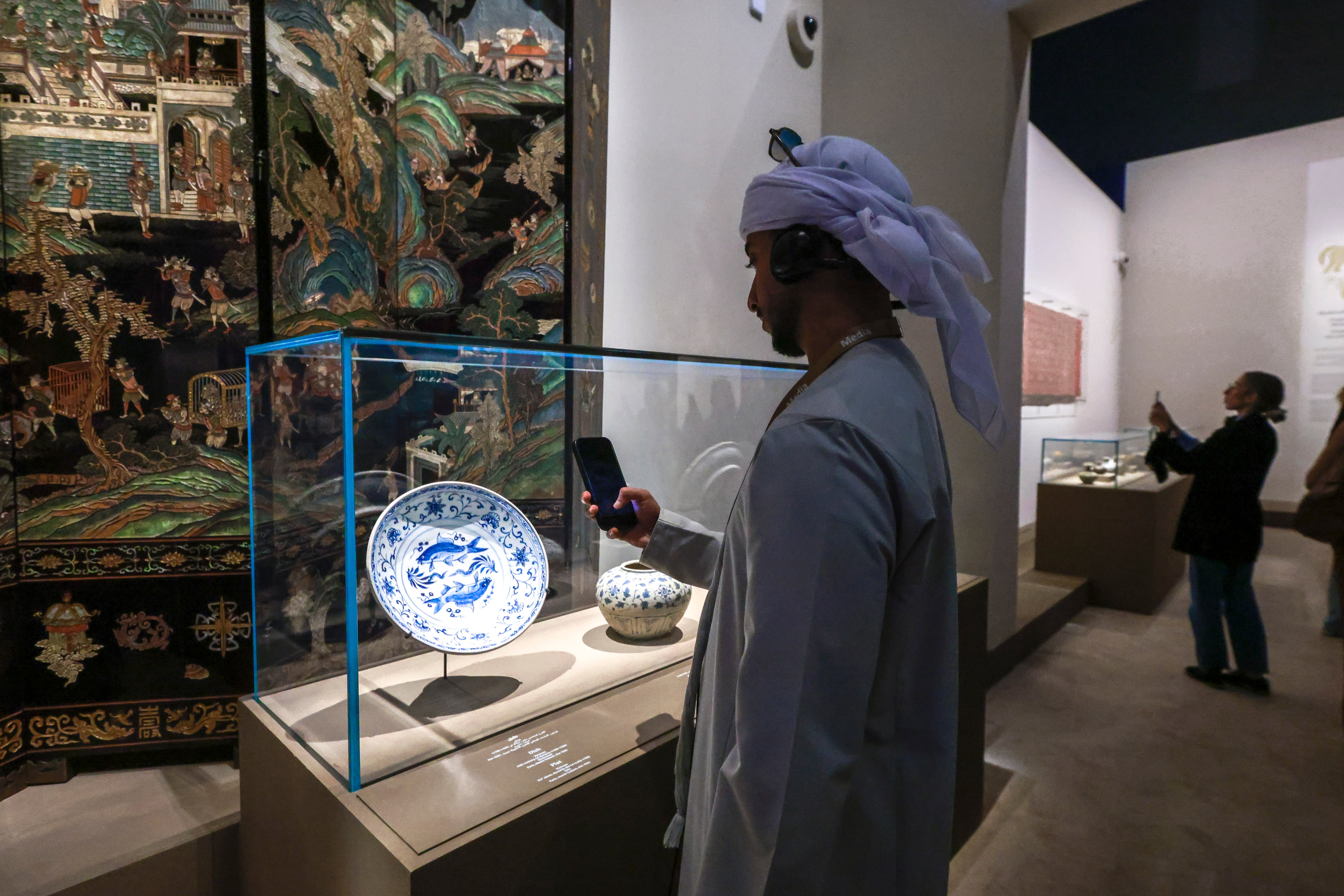
The Gulf has often been viewed in the West as an isolated region, defined by its desert landscape and community seclusion. However, two new exhibitions in Abu Dhabi museums challenge this perception, revealing that the Gulf was, in fact, a hub of commerce and culture. The Louvre Abu Dhabi's major exhibition highlights the Indian Ocean's role in connecting communities from East Africa to South-East Asia, showcasing over 200 objects that span a millennium of maritime exchange.
Meanwhile, the Zayed National Museum will explore the camel's significance in Arabian Peninsula life for over 7,000 years in December. Together, these exhibitions paint a picture of a region where land and sea intersect, explaining the UAE's historical role in connecting people and places.
The Louvre exhibition employs tangible artifacts to illustrate this history. Detailed ship models showcase the vessels that transported goods across the Indian Ocean, while a third-century Buddha sculpture from Gandhara underscores the exchange of religious and artistic traditions. The Gulf's pearl industry served as a vital link in this network, connecting the region's waters to markets worldwide.
The camel exhibition, set to open later, focuses on the inland aspects of this history. Bones dating back to 4500-4000BC, discovered in Abu Dhabi, provide evidence of an extinct wild camel species, while remains from Dubai's Saruq Al Hadid highlight the evolution of humans and domesticated camels. Traditional practices, such as Taghrooda poetry and Alheda'a, the camel calling tradition, further demonstrate the camel's deep-rooted cultural significance in Emirati society.
These exhibitions remind us that the people of the Gulf have always engaged in networks of exchange and developed customs suited to their environment. Today, these connections are evident in the UAE's international trade, which continues to thrive via ports, aviation, and rail links. The camel's enduring presence in racing, competitions, and poetry underscores its integral role in the Emirates' national identity.
Beyond celebrating familiar symbols, these exhibitions underscore the importance of understanding how the past shapes the present. They help us recognize the complexity of societies that preceded our modern times. For those seeking to understand the UAE, these exhibitions serve as a crucial reminder that the country's cosmopolitan outlook is rooted in a long history of exchange and encounter. In essence, they reveal how the Gulf embraced globalization long before the term was even coined.
Written by urgent.news from The National Business's reporting — not their text. Machine-written — may contain errors; check the original before relying on it.
This story
This is one outlet's version. Read the fullest account.
- How Abu Dhabi is revealing the roots of the UAE’s global outlook thenationalnews.com