Finanztagung: Klingbeil beim IWF - Wie lang trägt der deutsche Aufschwung?
Nach langer Konjunkturschwäche gibt es wieder Anzeichen für Wachstum in Deutschland. Aber bleibt das nur ein kurzfristiger Effekt? Die Bundesregierung will die Impulse auch international verstärken.
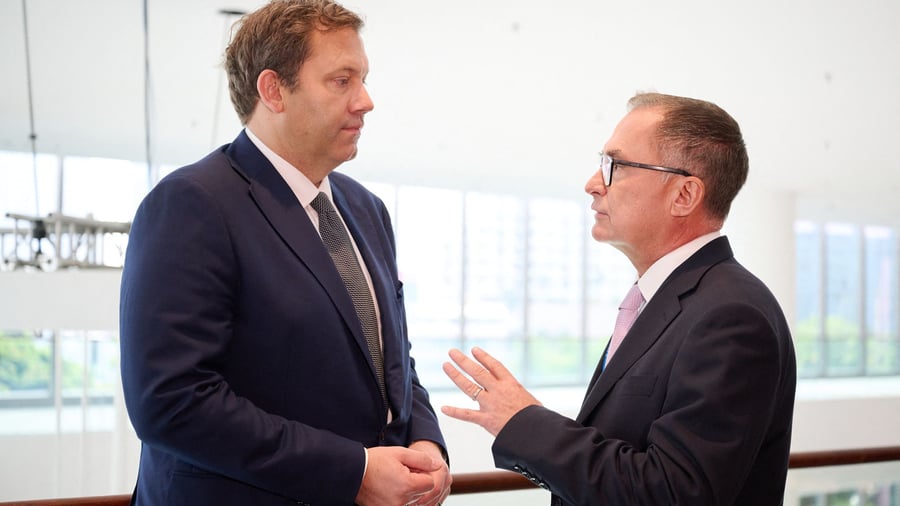
During the annual meeting of the International Monetary Fund (IWF) in Bangkok, Germany's Federal Finance Minister Lars Klingbeil encountered a pleasant surprise with the country's strong growth projections. At the conference, the SPD leader and Vice Chancellor could build on Germany's rapidly rising GDP forecasts. "It doesn't mean we can sit back," he emphasized.
"But it also means we can't hide." However, the sustainability of the recovery remains uncertain. Klingbeil advocated for private investments to boost this growth. The President of the Bundesbank, Joachim Nagel, sees opportunities for sustained growth. He recalled that the IWF projections often had to be revised downwards in the past.
"But this time it's the other way around." Economists now expect a 1.3 percent increase in 2026, up from 0.7 percent previously, and another 1.1 percent for the coming year. "It's not a smoke and mirrors effect," Nagel clarified. While the government-funded special reserve for state investments in infrastructure is clearly a significant driver, he would not agree to call it a "smoke and mirrors" scenario.
With the implementation of the federal government's reform package and the stimulus from artificial intelligence, momentum could be created. The numbers "certainly have potential to catch up in the right direction." Klingbeil stated: "After years of economic stagnation, we are now in a period of economic recovery." To make it a longer phase, the government also aims to attract investments at a major "Investor's Summit" for Germany.
The Finance Minister plans to present new capital market models for transportation projects and the pension system as arguments during the conference with Chancellor Friedrich Merz, Economy Minister Katherina Reiche (both CDU) and Klingbeil. The Finance Minister explained that despite various crises, the world economy remains resilient.
However, it is also burdened by high uncertainties. "The longer conflicts last, the more pronounced the effects on prosperity, energy prices, and supply chains become." To curb skyrocketing fuel prices due to the Iran war, the federal government and the states have implemented a multi-billion-dollar fuel rebate that ends by the end of the year.
Chancellor also announced a nationwide reduction in electricity taxes, aiming to become a next goal. Whether strong financial buffers can be secured remains to be seen. Klingbeil noted: "It all affects the budget." Will important reforms come? The black-red coalition will implement reforms to promote growth - from bureaucracy reduction to labor market rules, retirement, and care policies to keep contributions for employees and companies stable.
Bundesbank President Nagel spoke of a "fitness program" that is extremely important. He sees the "absolute readiness" of the government for it. The Union and SPD aim to initiate this amid various domestic political issues. However, he did not sense any eagerness from his colleagues, as Klingbeil observed.
Written by urgent.news from Handelsblatt's reporting — not their text. Machine-written — may contain errors; check the original before relying on it.