Elon Musk reveals ‘world’s first flying car’ at Tesla event
The Tesla Roadster 2 drove up a curved ramp before using SpaceX rocket thrusters to fly, flip and land Elon Musk has revealed Tesla’s latest model, which he claims will be the world’s first flying car, using technology from his aerospace company SpaceX to “basically fly like a rocket”. The billionaire, who hosted a demonstration of the Tesla Roadster 2 at the SpaceX rocket development and testing…
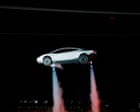
Tesla CEO Elon Musk unveiled what he claims is the world's first flying car at a recent event, showcasing the enhanced version of the Tesla Roadster 2. The vehicle, developed in collaboration with SpaceX, features SpaceX rocket thrusters that enable the car to "basically fly like a rocket," according to Musk. During the demonstration, the Roadster was seen driving up a ramp using suction, flipping, flying, and landing.
The sports car can accelerate from 0 to 60mph in less than a second, a feat highlighted by Musk during the event. The vehicle is equipped with altitude controls, thrusters, and main thrusters at the rear, allowing it to perform "rolls, crazy gymnastics," as Musk described. However, Musk cautioned that the prototype may not be legally compliant in all jurisdictions.
Musk first expressed doubt about the future of flying vehicles in 2014, but three years later, he announced the development of the Roadster 2, which he aims to produce in 2028. The two-seater Roadster 2 is priced at over $200,000 (£150,000), while a "thrust" version with a full flight system is available for a £50,000 deposit, and a one-seater "rocket" variant with "full flight system" is available only by invitation. Notably, flying the vehicle is not permitted on public roads.
Written by urgent.news from Guardian Business's reporting — not their text. Machine-written — may contain errors; check the original before relying on it.
This story
This is one outlet's version. Read the fullest account.