El comercio de la UE, en horas bajas: se hunden las ventas a EEUU y se dispara el déficit con China
Entre enero y agosto, las exportaciones europeas a EEUU se redujeron en 48.986 millones (un 12,7%), mientras que los desequilibrios con China se agravaron, con un saldo comercial negativo para Europa de 277.942 millones, un 14,7% más. Leer
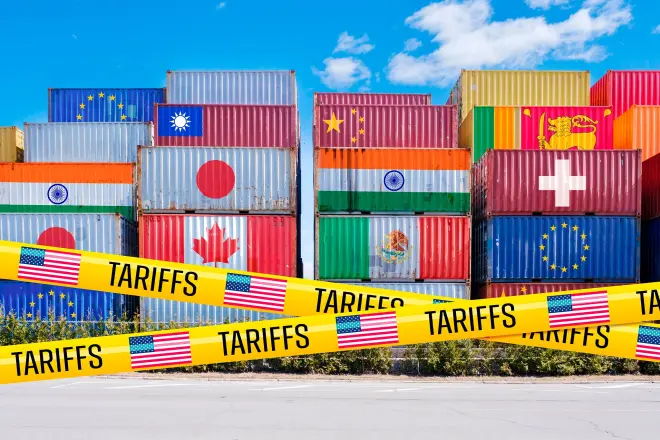
From January to August, European exports to the United States plummeted by 12.7%, falling to €335.758 million compared to €384.745 million in the same period of 2025. This represents a loss of €48.986 million. Meanwhile, the trade deficit with China widened, reaching €277.942 million, an increase of 14.7%. The European Union is struggling to adapt to the new international order, where trade has become a geopolitical weapon and divisions among large political and economic blocs are a sad reality.
Multilateral governance mechanisms have weakened, and protectionism is on the rise. In this turbulent scenario, the EU has accelerated the pace of new trade agreements, strengthening ties with Mercosur, India, Australia, or Indonesia, but it may lament the slow progress in diversifying trade away from China, its largest trading partner.
The United States has imposed tariffs that have severely impacted European exports to the country, while China has a highly imbalanced economic relationship with Europe, resulting in a substantial trade deficit. According to recent Eurostat data, published yesterday, European exports to the United States fell by 12.7% from €335.758 million in January-August 2025 to €384.745 million in the same period of 2025.
The decline is partly due to early purchases by American companies in the first quarter of 2025 to prepare for the impending tariffs imposed by the Trump administration, which exempted most American products from tariffs while imposing a 15% tariff on most European products. As a result, European sales to the United States have declined, while imports from the country have increased to over €250.068 million in August, a 4.8% rise.
This imbalance has led to a notable shift in the EU's trade surplus with the United States, which was €85.690 million in the first eight months of 2025 compared to €146.128 million in the same period of 2025, a 41% decrease. Europe's declining global geopolitical and economic influence has made the situation more challenging, particularly in its relationship with China, where trade imbalances have become increasingly severe despite the EU's efforts to curb Chinese imports.
In October, Brussels reached an agreement with Beijing to limit the import of hybrid vehicles from China and reduce tariffs on certain European products, such as olive oil or automotive components. However, EU Trade Commissioner Maros Sefcovic acknowledged that there is still a long way to go. In August, European exports to China amounted to €129.050 million, a 1.5% decrease compared to the same period of 2025, while imports from China surpassed €406.993 million, a 9% increase.
This resulted in a €277.942 million trade deficit for Europe, a 14.7% increase compared to the previous year. The data highlight a European trade sector in an increasingly challenging phase. In the first eight months of 2025, the EU's total exports abroad grew by only 0.4% to €1.76 trillion, while imports increased by 7.7% and surpassed €1.81 trillion, leading to a €46.100 million deficit compared to a €76.400 million surplus a year earlier. Clearly, Europe's trade is in a state of decline.
Written by urgent.news from Expansion ES's reporting — not their text. Machine-written — may contain errors; check the original before relying on it.