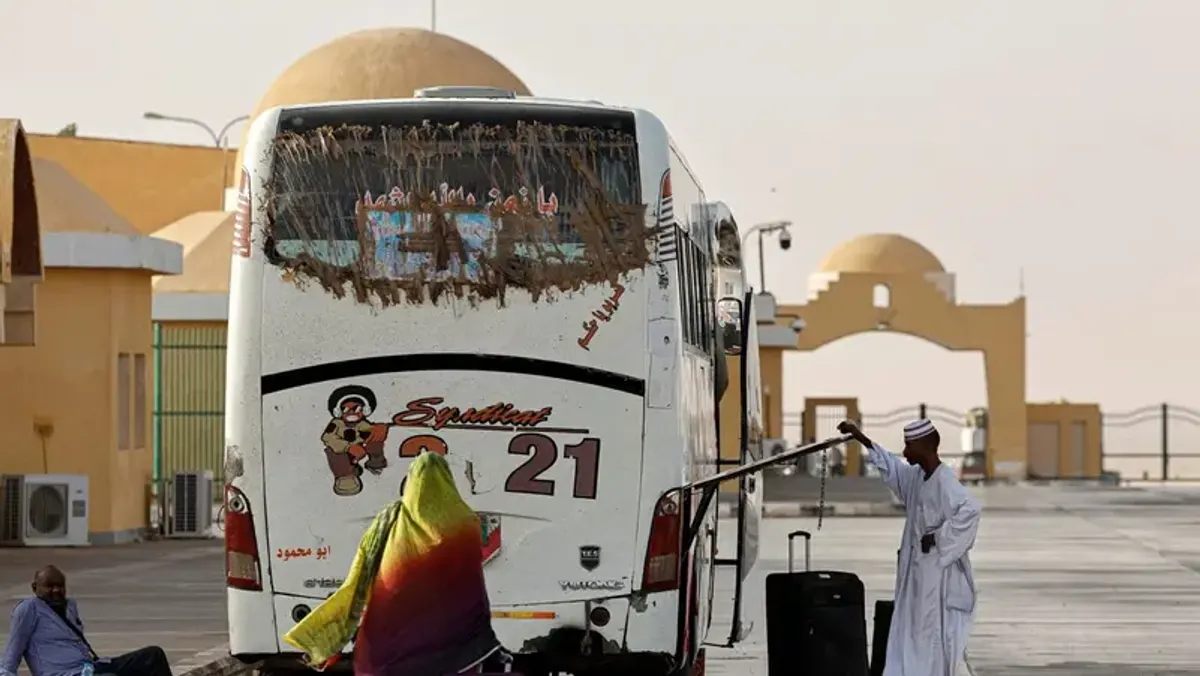
Egypt halts commercial truck crossings to Sudan via Qustul port indefinitely
Egyptian authorities have suspended commercial truck crossings to Sudan through Qustul land port until further notice, citing instability in the region.
Former Water Resources and Irrigation Minister Mohamed Nasr El-Din Allam expressed optimism that the Jonglei Canal project could double or triple Egypt and Sudan's annual water share. Egypt currently faces water scarcity, with each person receiving only 500 cubic meters of water per year, according to Allam. This figure represents a significant reduction from previous levels, as it equates to half of the 1,000-cubic-meter annual per capita benchmark set for desert countries such as Egypt by the World Bank.
The Jonglei Canal, a project with hydrological importance, holds potential to address Egypt and Sudan's water needs by harnessing water lost in swampy areas. The project was halted during Sudan's civil war in South Sudan, causing its progress to stall. Allam emphasized the necessity of linking water management to economic viability and enhancing cooperation among Nile Basin countries to optimize available resources.
Water scarcity has led Egypt to heavily rely on food imports and invest in seawater desalination to meet drinking water demands. The state bears substantial financial burdens in securing food for the population. Allam stressed that agricultural expansion must be based on precise hydrological and economic calculations, considering factors such as water costs per acre, crop values, and whether crop returns can cover water production costs.
He cautioned against using expensive water to grow crops that do not yield sufficient economic returns. Allam linked water resource management directly to decisions regarding crop patterns, highlighting that rice and sugarcane are among the most water-intensive crops. He advised evaluating agricultural policies to match the state's actual needs and water capacity, prioritizing water economics in agricultural decision-making.
Written by urgent.news from Egypt Independent's reporting — not their text. Machine-written — may contain errors; check the original before relying on it.
This story
This is one outlet's version. Read the fullest account.
- Egypt halts Sudan truck transit following fatal shooting of two Egyptian drivers egyptindependent.com