Computers Made of Human Brain Tissue Identify Braille Letters In Breakthrough
Scientists discovered that human brain organoids, which are small neural clusters derived from stem cells, could identify the Braille alphabet with a high degree of accuracy.
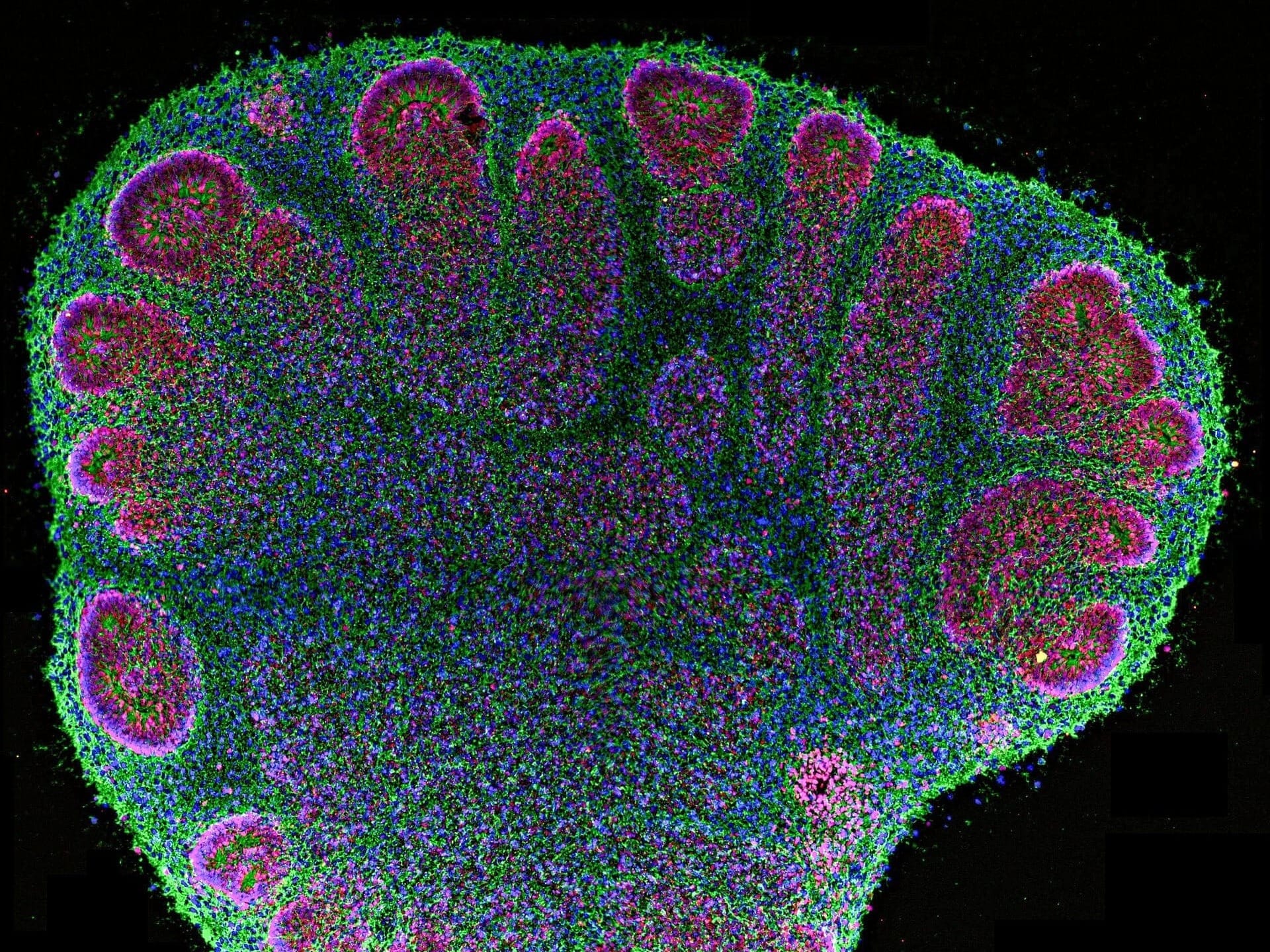
Scientists have achieved a significant milestone in the pursuit of creating computers made of human brain tissue by demonstrating that organoids can classify Braille letters, according to a study published in Frontiers in Artificial Intelligence. The researchers transmitted electrical signals representing Braille letters to tiny neural tissues derived from stem cells, known as organoids.
They found that a single organoid, composed of approximately 10,000 neurons, could classify the letters with around 61% accuracy. However, when three organoids were used together, their accuracy increased to 83%. Tianyi Liu, a PhD candidate at Bristol University who led the study, expressed excitement about the potential of these biological neural networks, noting that they could offer unique information processing capabilities.
The study falls under the emerging field of organoid intelligence, which aims to utilize organoids as biological "wetware" for computing applications. Previously, organoids have shown the ability to recognize speech, Japanese vowels, and even play the game Pong. The researchers focused on Braille to convert tactile information into electrical stimuli that the organoids could process and classify.
The study, while not proving that the organoids learned Braille or underwent permanent changes, indicates that they could classify Braille letters after receiving electrical inputs. Liu emphasized that the findings are preliminary and that future research could explore how organoids might adapt to new tasks through ongoing interaction.
Written by urgent.news from 404 Media's reporting — not their text. Machine-written — may contain errors; check the original before relying on it.