Chinese math tutor sparks debate for downgrading English in public schools
Debate over English's place in China's education system has resurfaced online after a popular math tutor called for the subject to be given less prominence in schools, arguing that most students rarely use the language after graduation and that learning it consumes too much of their time.
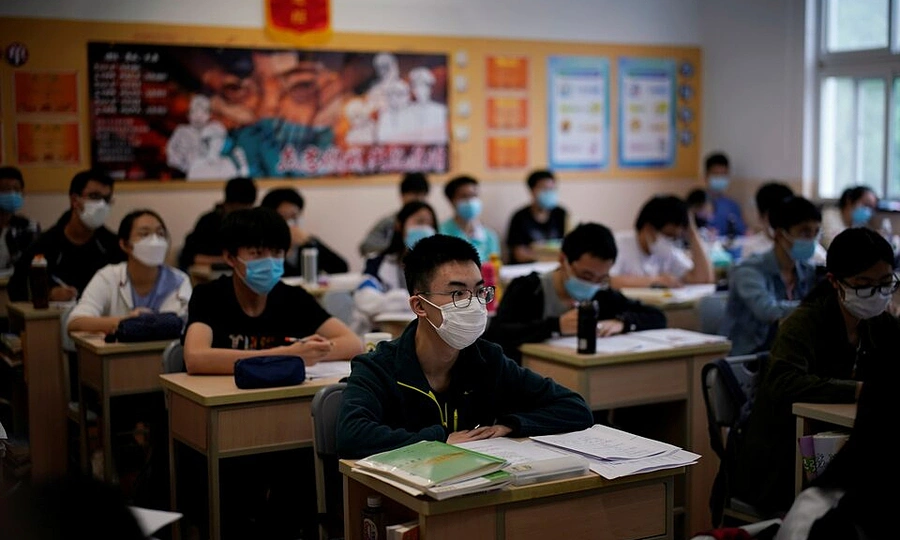
Tang Jiafeng, a math teacher known for guiding students through China's national postgraduate entrance examination, sparked a debate on social media recently by advocating for the reduction of English's status in Chinese public schools. He argued that excessive time and money is spent on English, even though it holds minimal relevance to most career paths.
Tang called for stripping English of its core subject status, claiming that the country places it in an unparalleled position that others do not share. He lamented that Chinese children are forced to study English before mastering their native language, and that China's ancient civilization merits treating English as a practical tool rather than an overwhelming focus.
Tang concluded his post by declaring, "the history of Chinese people worshipping foreign things must end."
His comments came after recent examination reforms that reduced the weight of history in national exams, a move Tang decried as disappointing. He argued that history education cultivates an understanding of past struggles and fosters strong values. If a subject had to be deprioritized, he believed English should be given less weight instead of history.
English holds equal footing alongside Chinese and mathematics as one of the three core subjects in China's basic education system. Under the gaokao's 750-point system, each subject earns 150 points. Despite recent reforms altering the weight and assessment of other subjects in both gaokao and zhongkao, English, Chinese, and mathematics maintain central importance in China's exam-driven education system.
Tang's proposal met criticism from those who maintain English's importance for education and career development. Hu Xijin, a former editor-in-chief of the Global Times, dismissed Tang's calls as extreme and narrow-minded, arguing that the proponents use nationalist rhetoric to present their stance as patriotic. Hu defended English as essential for students to access international knowledge and opportunities, emphasizing that foreign language skills are crucial for global citizens in a world shaped by globalization.
He warned that reducing English instruction could exacerbate educational inequality, as affluent families could continue to afford private lessons, while less privileged students might lose access to opportunities readily available to their wealthier peers. Hu emphasized that maintaining English as a core subject is about equal opportunity rather than admiring foreign cultures.
The debate over English's role in education is not new, and it has gained momentum alongside China's rising economic and technological influence. Supporters point to rising cultural confidence and the increasing use of Chinese on the global stage, arguing that advancements in AI-powered translation tools diminish the need for extensive foreign-language study.
Others question the efficacy of China's exam-focused English teaching methods, highlighting that students often spend years memorizing vocabulary and grammar without developing real-world communication skills. A 2025 EF English Proficiency Index, based on 2024 test results from over 2.2 million people, ranked China 86th among 123 countries and regions, placing it in the low proficiency category.
Critics also point to the content of English lessons, noting that textbooks and classroom instruction increasingly emphasize Chinese history, culture, and domestic achievements, while less attention is given to Western societies and international cultures. They argue that this shift may undermine one of foreign-language education's traditional purposes: helping students understand the wider world and engage with diverse cultures.
Written by urgent.news from VnExpress International's reporting — not their text. Machine-written — may contain errors; check the original before relying on it.