China leans in to hi-tech systems to counter emerging AI-fuelled terror threats
China revealed AI-powered drone interceptors and other uncrewed systems at an international counterterrorism forum in Beijing this week, as security experts warned that new technologies could enable new forms of terrorism. The equipment was on display at the Great Wall-2026 International Forum on Counterterrorism, which ran from Tuesday to Thursday and was attended by more than 320 defence…
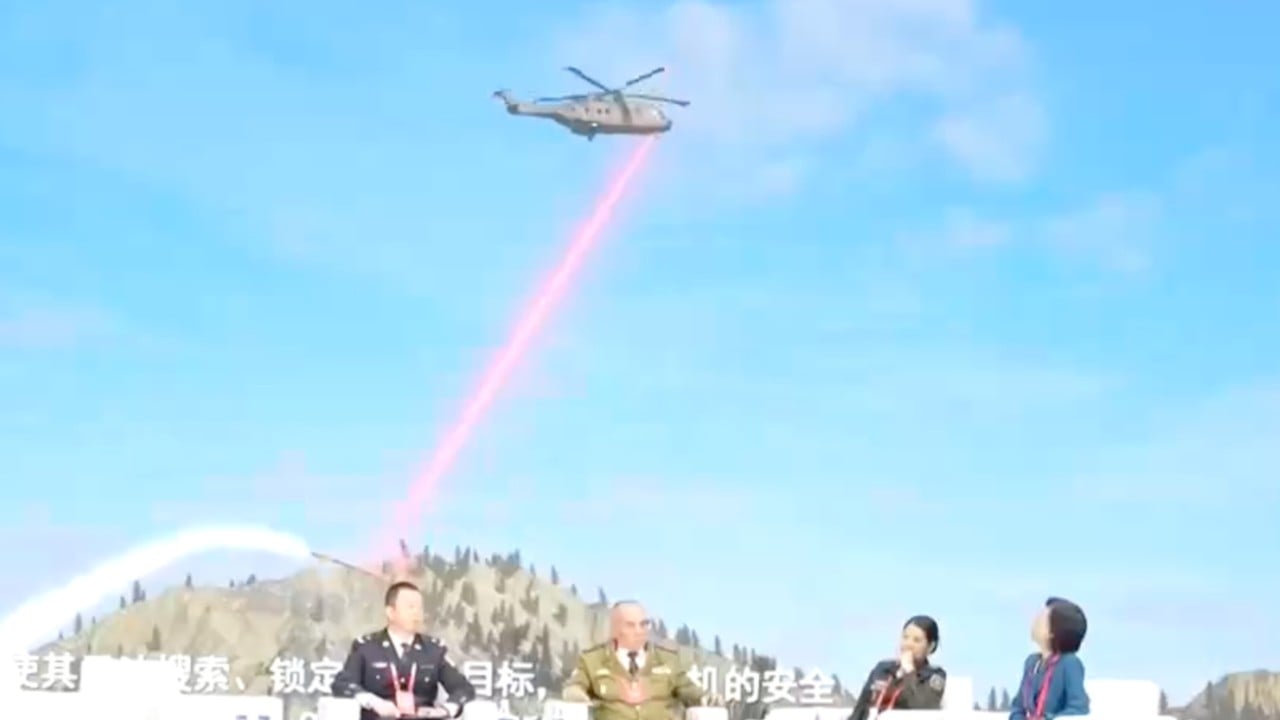
China showcased its advanced AI-powered drone interceptors and other unmanned systems at the Great Wall-2026 International Forum on Counterterrorism in Beijing, warning of emerging AI-fueled terror threats. Over 320 defence experts and military delegates from 62 countries attended the three-day event, which highlighted the dual nature of technological advancements in enhancing counterterrorism while simultaneously creating novel security risks.
The exhibition featured low-cost, high-speed interception drones with AI guidance systems capable of neutralising "low, slow and small" unmanned aerial vehicles with precision and speed. Additionally, humanoid robots, robotic dogs, unmanned ground vehicles, drone detection systems, and laser-based defence systems were presented, covering reconnaissance, swarm defence, and control capabilities.
The People’s Armed Police, China’s paramilitary force, organised the forum, signalling Beijing’s commitment to leveraging emerging technologies for addressing evolving security threats. Experts cautioned that terrorist organisations were increasingly leveraging emerging technologies, such as autonomous drones, drone swarms, encrypted communications, and AI, for radicalisation, recruitment, funding, and conducting complex multi-domain attacks.
As AI and unmanned systems reshape the threat landscape, terrorist groups are employing more autonomous UAVs, enhancing cyberattack capabilities, increasing drone swarm usage, and improving resilience to electronic warfare. The primary challenge lies in regulating autonomous intelligence systems – determining who utilizes them, who sells them, and how they are procured, deployed, and disposed of.
Coordinated international regulation is necessary to prevent misuse and bolster counterterrorism efforts. Notably, experts such as Wu Mingxi, a military intelligence and systems expert, emphasized the need for developers to configure large language models to prevent misuse by terrorist organisations. Malicious actors could exploit generative AI to create deepfake videos and misinformation, posing further challenges.
To avoid disastrous consequences, proactive attention must be paid to the application of AI technology to prevent its misuse by terrorist organisations and violent extremists, according to Peng Jijun, secretary general of the forum's organising committee.
Written by urgent.news from South China Morning Post's reporting — not their text. Machine-written — may contain errors; check the original before relying on it.