Caputo sees strong Argentina recovery, rismisses recession odds
Argentina’s economy minister says he expects a strong rebound in the fourth quarter of the year, dismissing the chances of a recession. Leer más
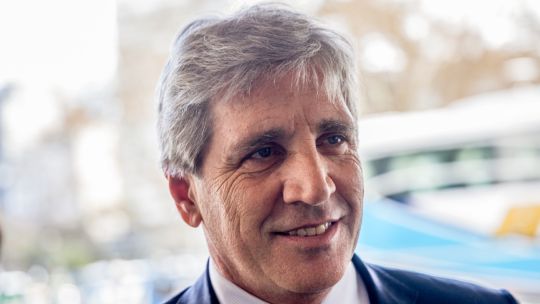
Argentina’s Economy Minister Luis Caputo anticipates a robust recovery in the fourth quarter and dismissed the possibility of entering a recession, despite a slowdown in growth. The resurgence will be fueled by construction, mortgage lending, and improvements in real wages as inflation continues to ease, he mentioned during an interview at the sidelines of the International Monetary Fund and World Bank annual meetings in Bangkok.
"We expect to witness a significant rebound in construction," he stated. "You'll observe it in the roads and in mortgage lending." His confidence stems from the economy contracting by 0.6 percent in the second quarter and again in July, prompting analysts to question whether Argentina could slip into a technical recession this year, heightening concerns among investors regarding President Javier Milei's challenging reelection campaign in 2027.
Additionally, Caputo expects lending to rebound as interest rates decline and real wages improve. Currently, credit growth has slowed down due to banks reallocating their focus towards government securities amidst a sluggish economy and rising delinquencies. However, borrowing costs have begun to fall, he noted, and banks have reported a decrease in delinquencies, although this improvement has not yet been reflected in official statistics.
Caputo dismissed the notion that the government is faced with a trade-off between stimulating growth and maintaining inflation control, which is President Milei's primary economic objective. The government has been relying on the currency to curb inflation, but economists have cautioned that the peso's appreciation in real terms is negatively impacting credit and growth, raising doubts about Milei's ability to prioritize disinflation without causing further harm to activity.
"Disinflation and growth are not mutually exclusive in our view," Caputo asserted. "We believe they are entirely compatible." He acknowledged that the energy shock had adversely affected growth, stating that without it, Argentina would likely be expanding at nearly four percent. "We remain committed to reducing inflation because we understand that's what's best for Argentines; it has been the president's commitment since the beginning, and it improves wages and alleviates poverty," he added.
"That will continue to be our priority." Earlier in the day, IMF Western Hemisphere Director Nigel Chalk expressed optimism about a "very positive" acceleration of growth heading into 2027. Caputo did not rule out Argentina rejoining international debt markets next year, but said the government would only consider it if borrowing costs become competitive with the more affordable financing options currently available.
"As long as we can refinance at lower rates, that's our obligation," he said. "If next year the conditions are right because the country risk falls significantly or global interest rates come down, and we can refinance at the same rates we're getting now, I would have no problem with that." Argentina is currently in discussions with the World Bank for approximately $10 billion in financing for private-sector initiatives, including rail projects, the Taca Taca copper mine in Salta Province, and a urea plant in Bahía Blanca, Caputo stated on X. Furthermore, Argentina is exploring multilateral funding of at least $2 billion for 2027, though the specific source remains undisclosed.
In a separate interview, Susana Cordeiro Guerra, World Bank Vice-President for Latin America and the Caribbean, indicated that they anticipate lending more to Argentina as Milei approaches the 2027 election. "We are definitely engaged in discussions and will support the government in their liquidity requirements at various points throughout the year in a strategic manner," she said.
The country faces a year marked by elections and more than $25 billion in debt maturities. President Milei's approval rating dipped to 38 percent in August, one of the lowest levels of his tenure, according to an AtlasIntel poll conducted for Bloomberg News. About 70 percent of Argentines described the labor market as poor, according to the survey.
Milei dismissed polls as unreliable in Argentina. Since Milei took office, Argentina has lost nearly 250,000 private-sector payroll jobs, and unemployment has risen to nearly 8 percent.
Written by urgent.news from Buenos Aires Times's reporting — not their text. Machine-written — may contain errors; check the original before relying on it.