Cannupa Hanska Luger’s Truth About America
The beauty of the Native artist’s forms seduces, but the visual history of destruction is embedded into each element.
In 1892, a photograph featuring two men standing next to a mountain of buffalo skulls captured the attention of the world at the Baltimore Museum of Art. The haunting image, displayed behind a Yurok artist Stormi Turner's custom curtain, served to emphasize the gravity of the tragedy, much like how museums today display human remains with warnings and precautions. Turner's addition aimed to honor the animals that were integral to the lives of many Native American groups and communities for centuries.
This recollection resurfaced when artist Cannupa Hanska Luger unveiled his latest exhibition, American Traditional, at the Garth Greenan Gallery in Soho. Luger, who draws inspiration from his heritage on the Standing Rock Reservation, moved away from his typically interactive and ceramic-based works to create a more direct and impressionistic display. The exhibition featured various pieces made of wood, ink, and archive materials, showcasing Luger's most compelling artwork to date.
In Mari Sandoz's book, The Buffalo Hunters: The Story of the Hide Men, published in 1954, the author reveals that North American bison, also known as buffalo, were more abundant than the human population in the region. The bison thrived without any diseases that could threaten them. However, this idyllic existence was abruptly shattered with the arrival of European settlers, who brought horses, firearms, and railroads, turning the bison's demise into an industrialized massacre.
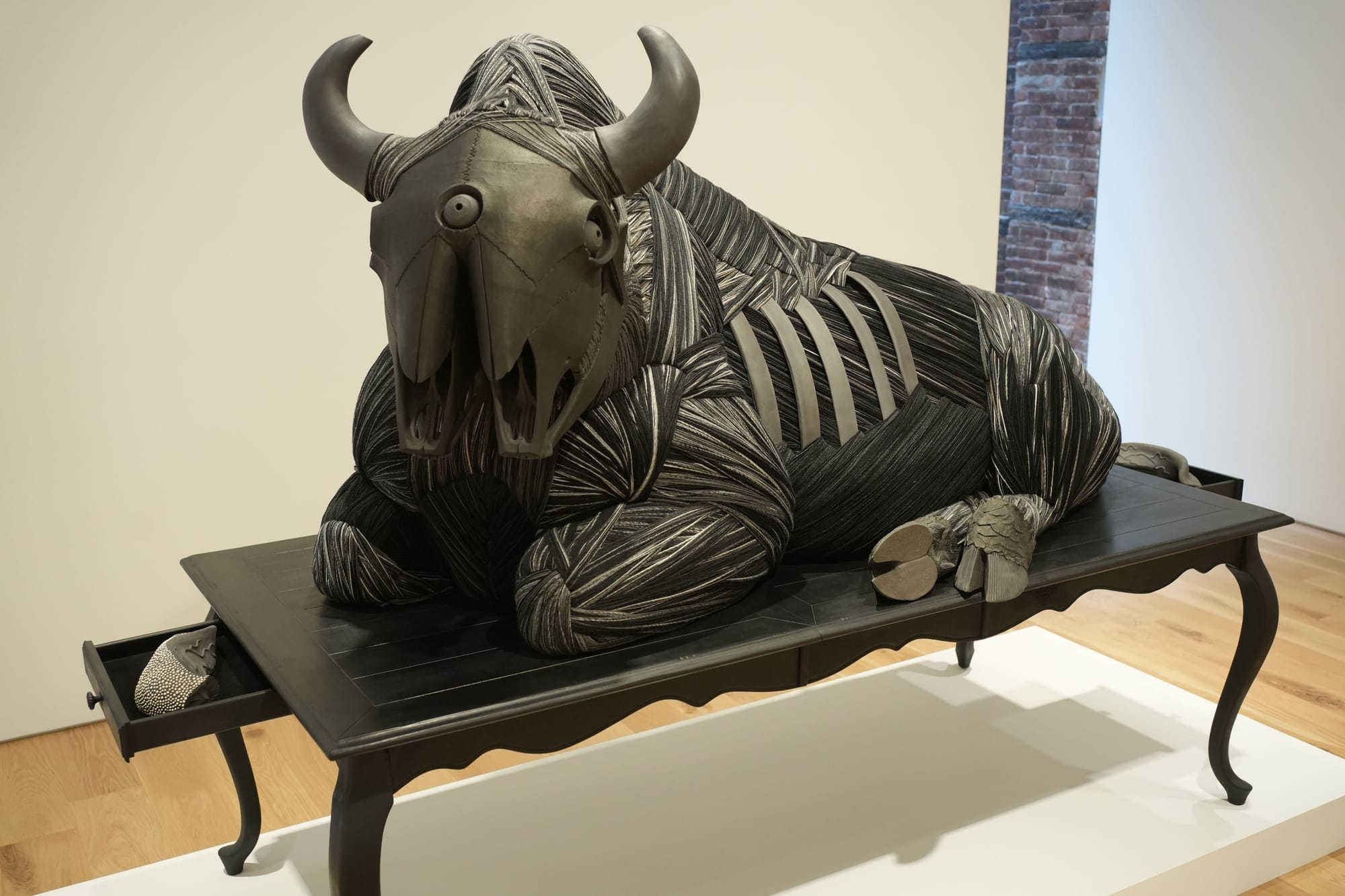
Luger's "Requiem" (2026) piece exemplifies this theme. On a blackened reproduction of a 19th-century American wood dining table, he places a black abstracted bison. As a citizen of the Three Affiliated Tribes of the Fort Berthold Reservation, Luger personally understands the history of devastation that decimated the buffalo from the tribes of the Great Plains.
According to Mari Sandoz, the bison were the sole source of subsistence, shelter, clothing, food, and fuel for the Plains Indians, making their eradication a catastrophe for these communities.
The Cree scholar Tasha Hubbard further elaborates on this topic. She argues that for Plains nations, the buffalo were considered kin and not separate species. Hubbard contends that the campaign against the bison was a genocide carried out by proxy, representing a "second major wave of trauma for Plains Indigenous peoples," following the epidemic disease.
General Philip H. Sheridan, as early as 1875, expressed this sentiment when he advised hunters, "every buffalo dead is an Indian gone." The sentiment was echoed by Texas legislator John R. Cook, who testified before Congress about Sheridan's views, stating that buffalo hunters had contributed more to settling the Indian question than the entire regular army had done in the previous thirty years.
Written by urgent.news from Hyperallergic's reporting — not their text. Machine-written — may contain errors; check the original before relying on it.