Building bridges for India’s wildlife
This country has an animal overpass that is nearly a kilometre long and spans a highway, a rail yard, and a golf course. Our increasingly busy highways surely need such facilitators for our wildlife
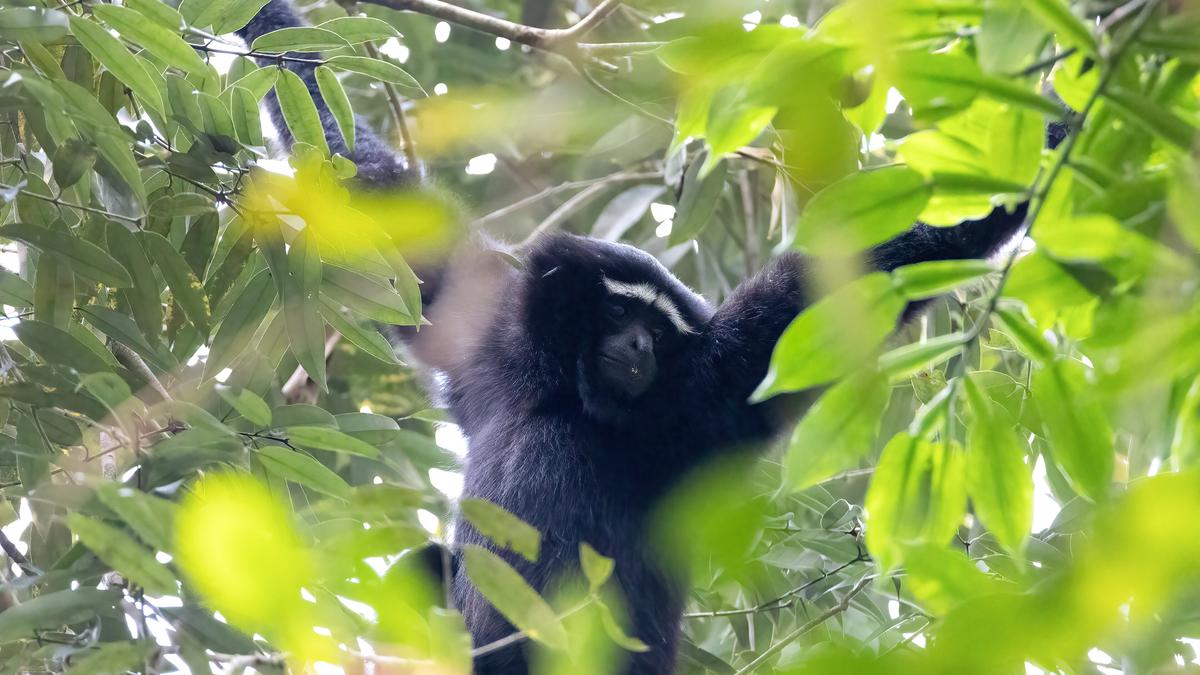
India has constructed the world's longest animal overpass—a nearly one-kilometre bridge—that spans a highway, a railway yard, and a golf course. As traffic congestion increases, wildlife corridors like this are crucial for maintaining healthy populations. The Hoolock gibbon is native to Northeast India, with both western and eastern populations experiencing a 90% decline in the last few decades due to habitat fragmentation.
These gibbons primarily inhabit the canopy, making them highly susceptible to road and rail infrastructure obstructions. The Hoollangapar Gibbon Sanctuary, home to roughly 130 western hoolock gibbons, is one such fragmented population. To address this issue, conservationists have employed innovative methods such as grooved tree bridges and gantry structures to facilitate safe crossings between isolated gibbon communities.
Globally, other endangered species like the lion-tailed macaque, slow loris, and three-toed sloth have also faced similar fragmentation challenges.
Written by urgent.news from The Hindu's reporting — not their text. Machine-written — may contain errors; check the original before relying on it.
This story
This is one outlet's version. Read the fullest account.
- Building bridges for India’s wildlife thehindu.com