Britain-sized Doomsday Glacier is melting faster than feared
Recent findings show that Thwaites Glacier might be a far bigger player in sea-level rise than previously thought. As warm ocean waters intrude beneath its icy surface, the glacier is melting at an alarming rate. If this trend persists, we could see a catastrophic detachment from the Mouginot Ridge by the year 2100.
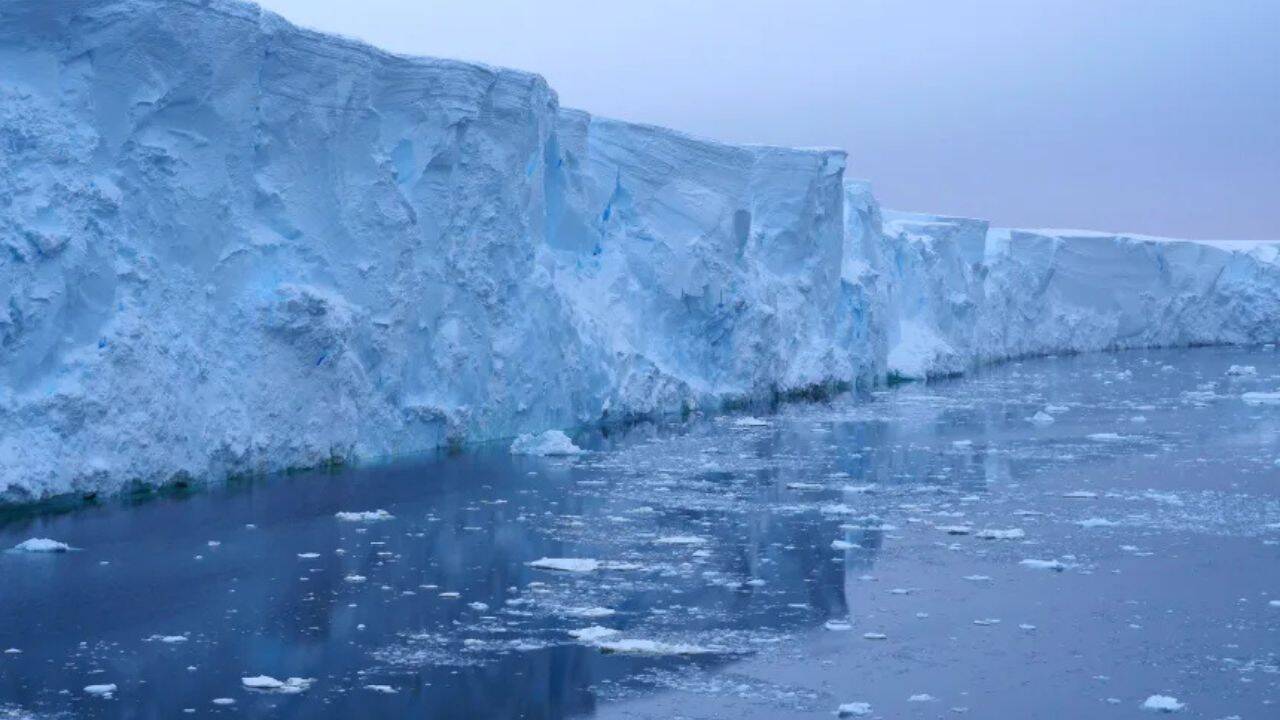
The Thwaites Glacier, also known as the 'Doomsday Glacier', will continue to lose ice even if the world's oceans cool, scientists have warned. The world's oceans hit their highest daily temperature on record this summer, with surface waters outside the polar regions averaging 21.1°C on August 22. Although the El Niño event in the Pacific is intensifying, it is unlikely that temperatures will drop significantly in the near future.
Even in the most extreme cooling scenarios, research led by the British Antarctic Survey (BAS) has found that the Doomsday Glacier in West Antarctica will keep losing ice for at least the next 150 years. If the entire ice sheet were to collapse, it would contribute an estimated 65cm to global sea level rise. This is significant, as every centimeter of sea level rise exposes an additional six million people to coastal flooding.
Researchers ran a series of computer models simulating the Thwaites Glacier and its neighbor Pine Island Glacier. They switched off the melting effects of the ocean beneath both glaciers. While Pine Island Glacier responded as scientists expected, stopping its melting and thickening over a 150-year period, Thwaites Glacier continued to lose ice even without ocean melting. The rate of ice loss slowed down over time as the glacier thinned.
Dr. Rosie Williams, a glaciologist at BAS and lead author of the paper, notes that past changes in ocean-driven melting have now "committed us to unavoidable future ice loss from Thwaites Glacier." This ice loss cannot be undone or prevented by merely cooling the ocean. The Thwaites Glacier began retreating in the 1940s, and warming oceans have become a major factor driving ice loss.
While the simulations indicate that historical melting of Thwaites Glacier "commits future generations to the challenges of sea level rise," the ice loss will be further exacerbated if the world does not curb and ideally reverse greenhouse gas emissions, according to Professor Paul Holland, BAS ocean modeller and co-author of the report.
"The state of committed change in other major glaciers in Antarctica is still unknown," Holland says. "We urgently need to take action to address the human activities driving changes in ocean melting of these glaciers."
Written by urgent.news from Euronews's reporting — not their text. Machine-written — may contain errors; check the original before relying on it.
This story
This is one outlet's version. Read the fullest account.