Behind this Timorese hotel's elegant facade lies a dark history of abuse
Timour Leste's Hotel Flamboyan appears elegant and historic to look at, but it was a house of horrors for Timorese women during Indonesian occupation.
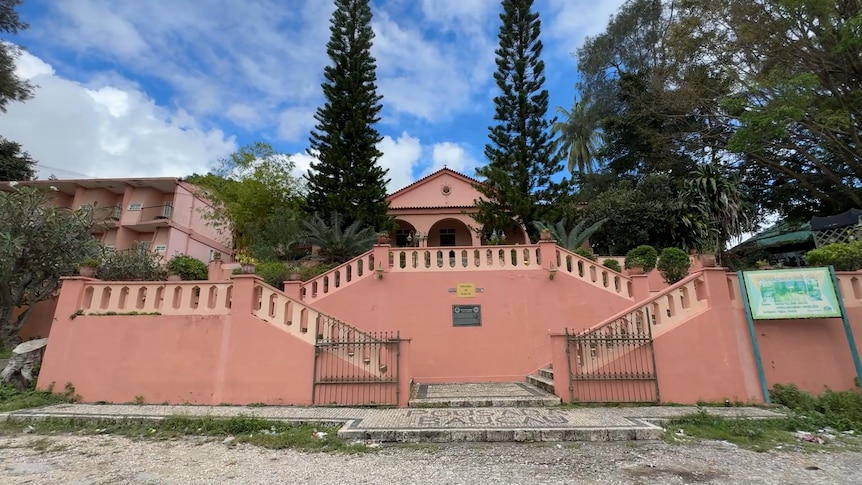
On the surface, Baucau's Hotel Flamboyan emanates an air of elegance and historical significance, bearing witness to Timor-Leste's Portuguese colonial heritage. However, for Maria de Fátima, the establishment carries a different narrative - one steeped in sorrow and suffering. During Indonesia's occupation of Timor-Leste, the hotel became a notorious site for detention, torture and sexual violence.
In 1975, Maria was apprehended after her brother was accused of supporting Fretilin, the movement leading the resistance against Indonesian rule. Indonesian forces, targeting Fretilin's supporters and their families, often ensnared women in the process. Maria was subsequently held captive at Hotel Flamboyan, enduring brutal treatment including beatings, water submersion and rape at the hands of Indonesian soldiers.
Her ordeal was far from over, as Indonesian soldiers continued to abuse her for over two decades as a means to extract information about her brother's whereabouts. This abuse culminated in multiple pregnancies, resulting in four children. The trauma and uncertainty lingered long after Indonesia's withdrawal in 1999. The ordeal has now been documented in a book, which includes testimonies from survivors like Maria de Fátima, who have grappled with keeping their experiences hidden for decades.
Martha Leong Pereira, from the survivor advocacy organization ACbit — Chega Ba Ita, emphasized that sexual violence was a deliberate strategy employed by the Indonesian forces to intimidate and break the will to resist among the Timorese women. Women suspected of supporting the resistance or related to resistance members were frequently detained, threatened and assaulted.
Many survivors were forced into relationships with Indonesian soldiers or repeatedly raped in military facilities and private homes, enduring the psychological, social and economic ramifications for decades.
The consequences of this violence have been passed down to the children born from these experiences. Human rights museum Centro Nacional Chega, which is behind the book launch, works to preserve the memory of the conflict, advocate for human rights and support the implementation of Timor-Leste's truth commissions' recommendations.
Written by urgent.news from ABC News AU's reporting — not their text. Machine-written — may contain errors; check the original before relying on it.