Automobilindustrie: Berlin und Paris einig - „Verbrenner-Aus damit Geschichte“
Merz und Macron wollen die EU-Regeln für neue Verbrenner nach 2035 stärker lockern als bisher vorgesehen. Dafür musste Berlin an anderer Stelle Zugeständnisse machen. Der Kanzler zeigt sich zufrieden.
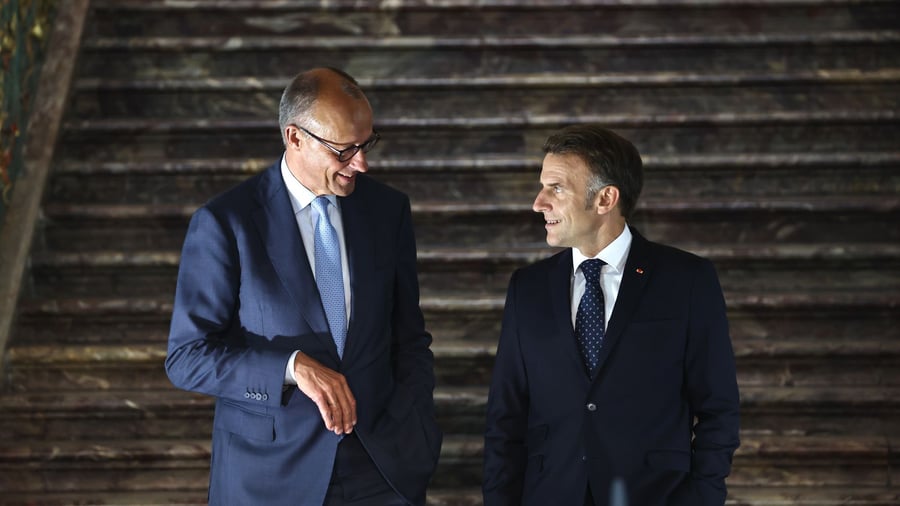
Germany and France have reached an agreement on the future of conventional combustion engine vehicles and electric cars. The deal ensures that manufacturers can continue selling new conventional and hybrid vehicles after 2035 without facing penalties. Bundeskanzler Friedrich Merz (CDU) stated, "The end of the era for combustion engines is now history."
This agreement could help achieve a majority in the EU Council of States. Merz mentioned positive reactions from other countries. Both Germany and the automotive industry had previously pushed for a more lenient approach to the combustion engine ban. France and six other EU countries had warned of a strategic mistake in June. Together, they had previously blocked decisions that could block the process.
Now, France has changed its stance. The agreement aims to significantly reduce CO2 emissions while strengthening Europe's capacity for the development and production of the next generation of electric vehicles. It also focuses on creating jobs. EU states and the European Parliament agreed in 2022 that new cars in the EU should not emit harmful carbon dioxide (CO2) starting in 2035, or else face penalties.
The EU Commission proposed in December to continue allowing cars with combustion engines. The EU Parliament and EU states are currently discussing the proposal. The new German-French compromise indicates that manufacturers would only need to reduce their average emissions by 90 percent by 2035, without needing to compensate for the remaining 10 percent.
The EU Commission had suggested that the remaining 10 percent must be compensated by CO2-neutral fuels or green steel. This proposal gives manufacturers more flexibility and less incentive to switch. They could still sell new gasoline and diesel vehicles as long as their fleet meets the prescribed standards. Additionally, there are plans for regulations on alternative fuels or fuels derived from biomass.
Homegrown green steel and aluminum will also be counted favorably against the manufacturers' CO2 values. Conversely, Germany is making concessions to France regarding industrial support. State subsidies for cars will primarily be limited to vehicles produced in EU Member States, the UK, and other countries in the European Free Trade Area.
This means that state aid could also be used for British cars. Germany had previously advocated for a softer regulation that would include suppliers from more trading partners, such as Turkey and Morocco, where many car manufacturers produce. "Electric vehicles will inevitably prevail," Environment Minister Carsten Schneider (SPD) said, "because they are technically superior and can save drivers a lot of money."
The goal is to ensure that they are produced in Europe, not just in China. He pointed to incentives for producing cars with climate-friendly green steel. "The clear expectation of German companies is that they take advantage of the new opportunities for investments and job guarantees here in Germany." Vice Chancellor Lars Klingbeil (SPD) called on automotive manufacturers to invest in the future of German locations and secure jobs.
"We do not want Germany to only have components assembled from Asia, but for crucial components to be developed and produced here." "Catastrophic" or Strong Signal? Critics, such as the European Transport Association T&E or MEP Michael Bloss (Green), warned that such a regulation would set little incentive for adapting the automotive industry.
According to models by the association, the concept would weaken the sales of electric vehicles. Susanne Goetz of T&E Germany criticized: "This agreement is catastrophic for the industrial location of Europe, our climate and consumers." Bloss warned: "A weakening of the regulation costs planning certainty, delays the production of good and affordable electric cars in Europe and risks losing Europe's technological edge in the global market."
EU transportation policymakers Jens Gieseke (CDU) and Jan-Christoph Oetjen (FDP) each expressed a strong signal for the automotive industry. "Flexibility for automotive manufacturers and openness for technology in achieving our climate goals help not only the manufacturers, but also the suppliers," Oetjen argued. Gieseke saw a balanced compromise between the interests of manufacturers and suppliers.
Written by urgent.news from Handelsblatt's reporting — not their text. Machine-written — may contain errors; check the original before relying on it.