YouTuber built 30-frame-per-second grayscale Game Boy, then open sourced it for all e-paper displays
Not afraid of custom waveforms frying your e-paper? Download it from GitHub and give it a shot on your stock screen today
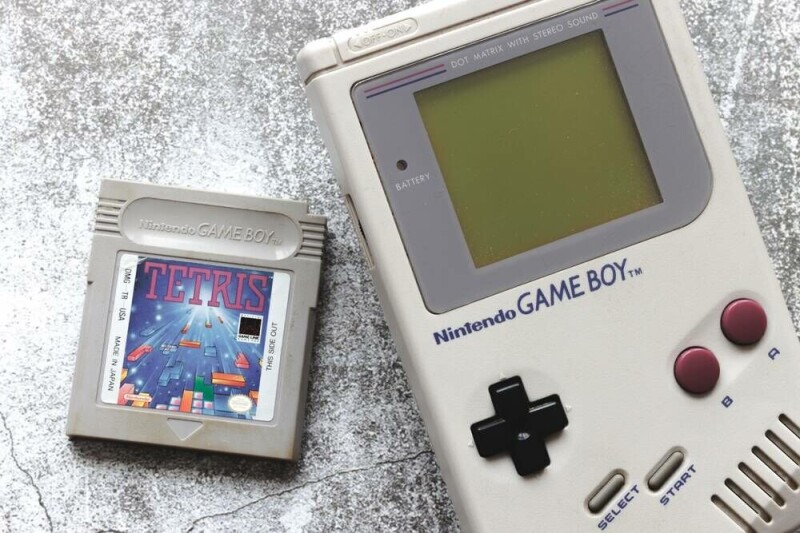
YouTube creator Bo Made It recently showcased a custom open-source E Ink driver that has the potential to enable any display to render grayscale Game Boy games at 30 frames per second. This "InkBoy" project was demonstrated on a small ESP32-S3-powered e-paper board, which produces an output that closely resembles the original Game Boy's olive-green screen.
E Ink displays are renowned for their power efficiency due to their ability to retain displayed content without continuous energy consumption, but they are limited in their refresh speed. Bo's display, for instance, has a refresh speed of approximately 300 milliseconds, making it suitable for static images but not ideal for fluid motion.
To overcome these limitations, Bo designed his own driver that adjusts the waveform and allows for per-pixel driving, reducing image ghosting and enabling the display to show four shades of gray. The driver ultimately achieves 30 frames per second, a significant improvement from the original 3.33 frames per second. Bo believes he stumbled upon the possibility of rendering gray levels by observing that the display doesn't instantly transition between black and white. With further refinements, he was able to produce the desired gray levels at the higher frame rate.
While this innovation is impressive, it is not the first of its kind. Another YouTuber previously developed a custom E Ink Game Boy using entirely unique hardware to bypass standard E Ink screens. Bo's achievement lies in his ability to code a driver for stock hardware, making it accessible to anyone interested in trying it out.
Bo has published the driver on GitHub, but with a significant caveat: custom waveforms and higher refresh rates can potentially cause permanent damage to the E Ink screen, and the long-term effects on panel life were not assessed during the experiment. Users interested in replicating this project should proceed with caution and consider using a spare E Ink screen to experiment with this technology.
Written by urgent.news from The Register Science's reporting — not their text. Machine-written — may contain errors; check the original before relying on it.