What did the Liberty Bell sound like? Science is on the case.
Researchers hunted for clues in modal analysis of 20th-century replica bell at Penn State Behrend.
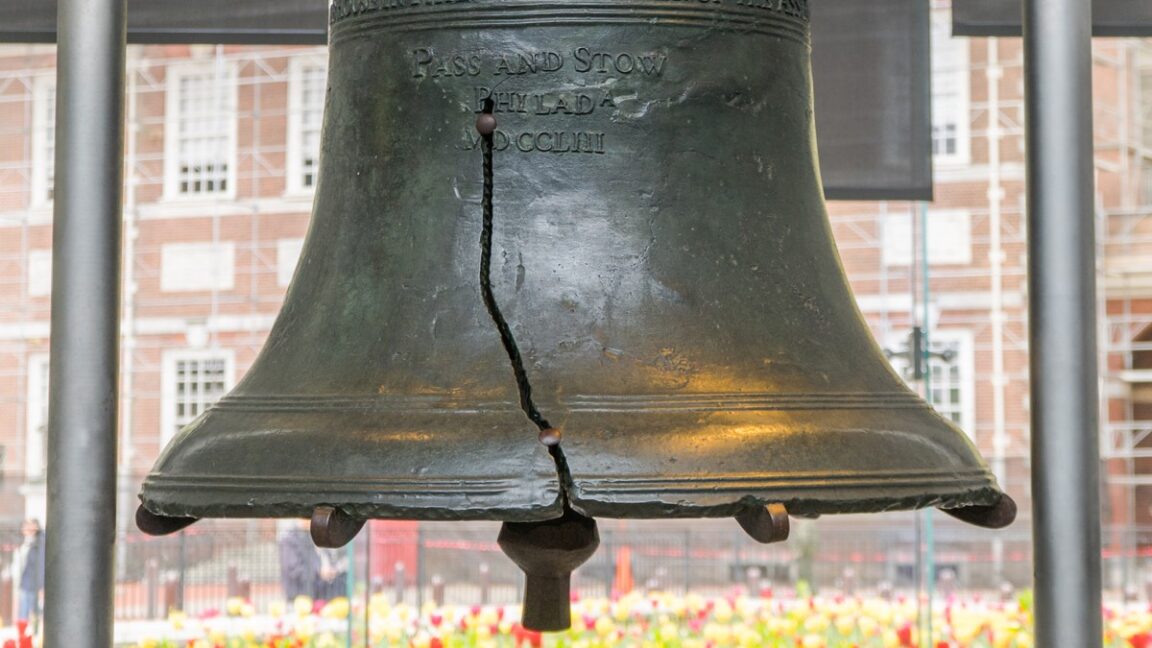
The Liberty Bell, famed for its cracked appearance, has remained silent for over 180 years since its last known toll. Nevertheless, scientists at Penn State University have delved into its acoustic characteristics, using data from a replica of the bell. This research emerged in commemoration of the United States' 250th anniversary.
The study was initially showcased at a meeting of the Acoustical Society of America in Philadelphia and subsequently published in Physics Today. The precise moment when the Liberty Bell received its signature crack remains uncertain, but it is believed to have happened between 1817 and 1846. A 1846 article from the Public Ledger recounts a ringing on February 23, 1846, noting the presence of a crack and an unsuccessful attempt at repair by filing.
The extension of the crack from this attempt led to the bell's irreparable damage, resulting in its current state as a mute artifact in a steeple. This was not the Liberty Bell's first experience with cracks; shortly after arriving in Philadelphia in 1752, the bell's rim cracked upon the clapper striking during testing, leading to two recasts by foundry workers John Pass and John Stow.
Each recast resulted in distinct sounds, with one bystander likening the first recast's sound to coal scuttle banging together.
Written by urgent.news from Ars Technica Science's reporting — not their text. Machine-written — may contain errors; check the original before relying on it.
This story
This is one outlet's version. Read the fullest account.
- What did the Liberty Bell sound like? Science is on the case. arstechnica.com