Six wild ideas for perpetuating your mind
Have you ever thought about what makes you you? Science assures us it has everything to do with the three-pound organ between our ears, with its billions of neurons and trillions of delicate connections. But it’s a lot trickier to explain why we have a sense of self-awareness or to pin down precisely where that…
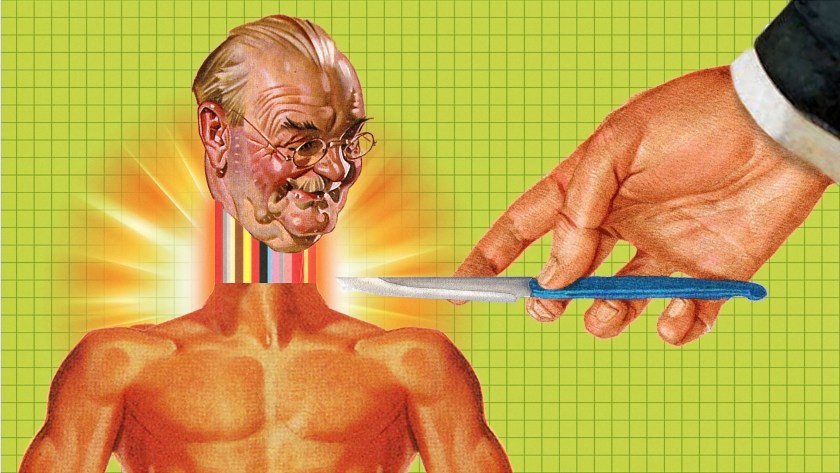
Six speculative concepts for sustaining the mind have emerged in recent years, captured by researchers and technologists. The most prominent proposal is the head transplant, championed by Italian surgeon Sergio Canavero. Canavero's method involves severing the spinal cord and reconnecting the severed ends with a sealant, which he believes has already been demonstrated in pigs.
However, mainstream researchers remain skeptical, arguing that the technology required for such a feat is still far beyond current capabilities. Another idea gaining traction is the creation of "mindclones" using artificial intelligence. Companies like StoryFile and Afterlife AI enable individuals to upload their data and likeness into a digital representation, which can then converse or act as a video avatar.
While these clones can offer a sense of continuity, they lack true self-awareness, a fact acknowledged by neuroscientists who are still grappling with the concept of consciousness. Lastly, a company called Bexorg is preserving human brains in jars and attempting to "reboot" them with oxygen-rich artificial blood. The brains are metabolically active, but they lose coordinated electrical activity, rendering them non-conscious.
Although this approach could be useful for drug testing, it is far from achieving cognitive immortality.
Written by urgent.news from MIT Technology Review's reporting — not their text. Machine-written — may contain errors; check the original before relying on it.
Also reported by 1 other outlet
- Six wild ideas for perpetuating your mind technologyreview.com