Scopa targets municipal governance, revenue failures
Scopa is considering a deeper inquiry into systemic failures in local government after hearings with five metros and two municipalities uncovered revenue, infrastructure, governance and IT-control problems.
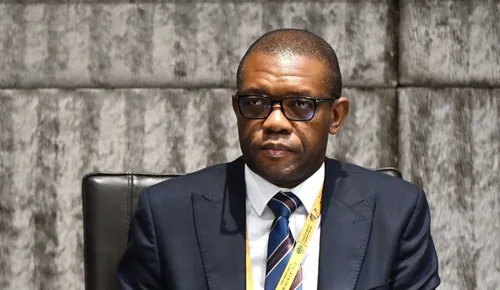
The public accounts watchdog, Scopa, is contemplating an inquiry into systemic governance, revenue, and infrastructure issues plaguing seven municipalities, including five metropolitan areas. After consulting with seven municipalities, spanning five metros and two district municipalities, the Standing Committee on Public Accounts (Scopa) has determined that a thorough investigation is warranted to address governance problems.
The committee, which previously examined the Road Accident Fund (RAF), is still deliberating on the specifics of the proposed inquiry. Scopa Chair Songezo Zibi announced that the investigation would likely target a metropolitan or local municipality, aiming to conduct an enhanced oversight similar to the RAF probe. Zibi emphasized that inquiries shed light on systemic problems and facilitate broader policy discussions about local government and parliamentary interventions.
During its interactions with the five metros—Johannesburg, Tshwane, Ekurhuleni, Mangaung, and eThekwini—Scopa discovered widespread revenue challenges, encompassing both collection issues and consumer affordability concerns. Additionally, the municipalities faced significant electricity and water losses due to inadequate maintenance and cable theft.
Furthermore, Scopa identified a lack of effective management and governance within entities, with the City of Johannesburg being a prime example, as all its entities exhibited severe governance and performance issues. The committee also found that infrastructure maintenance expenditures were well below the national guideline of 8-10% of the budget, with most municipalities spending less than 5% on maintenance.
A critical concern was raised regarding Ekurhuleni's ICT environment, where several crucial systems, including billing and revenue management, electricity revenue, water revenue, rates clearance, and traffic fine management, were vulnerable to unauthorized access and manipulation. These vulnerabilities exposed the municipality to substantial financial and operational risks, such as altered customer accounts and reduced or removed debt balances.
In the case of eThekwini, MPs highlighted severe procurement flaws and financial risks associated with a flood disaster contract awarded to a service provider at an exorbitant rate of R208,000 per day. Following the municipality's decision to terminate the contract due to unaffordability, the service provider filed a R70 million legal claim, requiring court intervention to enforce payment based on reasonable market rates instead of the inflated contractual agreement.
Scopa and the CoGTA Portfolio Committee concluded that this situation demonstrated a complete failure in price benchmarking, supply chain management, and contract oversight during an emergency disaster response, leaving the municipality susceptible to litigation and significant financial exposure.
Written by urgent.news from IOL's reporting — not their text. Machine-written — may contain errors; check the original before relying on it.