Ringen um Billionen-Haushalt: Verhärtete Fronten: Merz beharrt auf schlankem EU-Haushalt
Deutschland pocht auf ein deutlich kleineres neues EU-Budget als bislang vorgeschlagen. Beim EU-Gipfel prallen Welten aufeinander. Braucht Merz für künftige Treffen einen größeren Koffer?
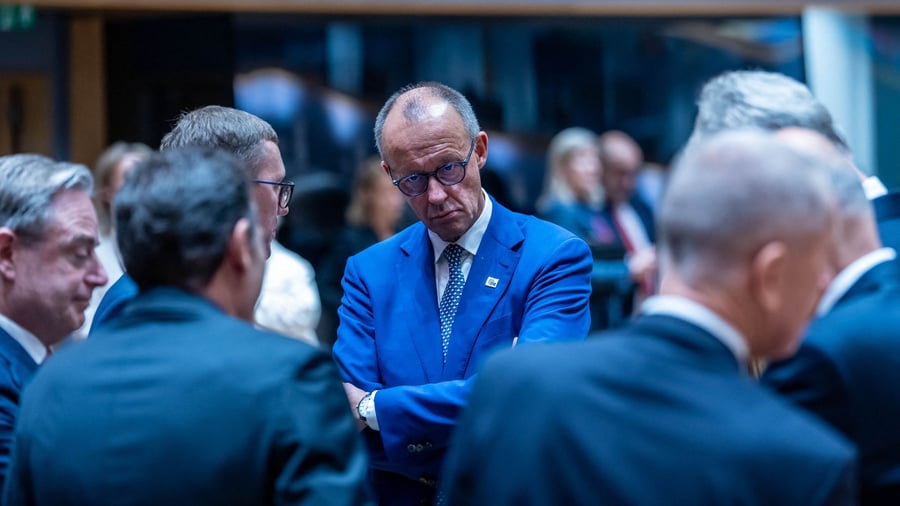
The EU budget dispute for 2028 to 2034 remains intractable, with no compromise on the horizon. At a Brussels summit, Chancellor Friedrich Merz and leaders from other wealthy countries insisted on demands for significant cuts to the current budget proposal. Conversely, a large group of other nations did not seek further reductions.
These include countries that receive substantial EU funding for structurally weak regions and pay less into the EU budget than they receive. Merz described the negotiations as "very, very difficult" and made clear that he did not expect a quick agreement. Swedish Deputy Prime Minister Ulf Kristersson stated that the present proposal did not constitute a "basis for negotiations."
Germany, the Netherlands, Austria, and Finland are among the countries that typically contribute significantly more to the EU budget than they receive. The current draft seeks to reduce the next budget by around 159 billion euros compared to an initial EU Commission proposal, totaling approximately 1.826 trillion euros for the seven-year period.
Internal pressures compel Merz and other net contributor leaders to find a compromise, as rising contributions could be politically exploited, especially with simultaneous national budget discussions on savings and high national burdens. Germany currently funds over a fifth of the national contributions to the EU budget, and Merz asserted that no member state can afford to pay such extensive contributions.
Merz also linked potential German concessions in negotiations to further deregulation measures. "Without a significant reduction in Europe's bureaucratic overload, discussing money becomes relatively meaningless," he said. Highlighting focus areas for future EU spending, Merz emphasized competitiveness and defense as paramount, while seeing no additional need for agriculture policy and the so-called cohesion policy.
The summit aims to find a compromise by the end of the year to avoid election disruptions in countries like France and Poland. However, several leaders made it clear they would prefer to take more time rather than accept an unsatisfactory deal. Merz stated they were already two and a half months apart by the summit's end. This does not mean that further meetings could not produce solutions.
For the December summit, Merz suggested the usual one or two-day duration might extend for several days. 2020's crucial negotiation round for the 2021-2027 budget lasted nearly four full days. Ukraine is another top agenda item for the two-day EU summit, with Ukrainian President Volodymyr Zelenskyy expected to attend. Merz urged at the summit's start to increase aid for Ukraine, both this winter and next year.
He stated he would need to raise funds again to help Ukraine sustainably in the next year. Specifics were not provided. Ukrainian Finance Minister Serhiy Martchyenko stated in September during a visit to Brussels that the country's regular budget for next year lacked 32.6 billion US dollars (29.1 billion euros). He cited a need for 45 billion US dollars (40.1 billion euros) for defense spending.
Funding for Ukraine for this year is secured. Ukraine's ongoing threat of aggressive Russian advances was also discussed. Merz warned of an increasingly reckless Russian attack wave against Ukraine, not just to preserve territorial integrity but also the political order of Europe.
Written by urgent.news from Handelsblatt's reporting — not their text. Machine-written — may contain errors; check the original before relying on it.