Rigorous Analysis Confirms NASA’s Artemis II Heat Shield Performance
NASA’s Artemis II mission sent four astronauts around the Moon and brought them safely back to Earth, laying a foundation for crewed flights to the Moon’s surface. Additional engineering data analysis of the Orion spacecraft’s heat shield confirmed initial data showing the heat shield performed as expected. In particular, NASA measured whether the thermal protection […]
NASA's Artemis II mission, which saw four astronauts orbit the Moon before safely returning to Earth, has undergone rigorous analysis of its heat shield performance. The data confirmed that the thermal protection system effectively safeguarded both the crew and the spacecraft as it reentered Earth's atmosphere. This was the first time astronauts had flown aboard Orion, with the spacecraft reaching a maximum velocity of 39 times the speed of sound and experiencing temperatures over 4,000 degrees Fahrenheit during its peak.
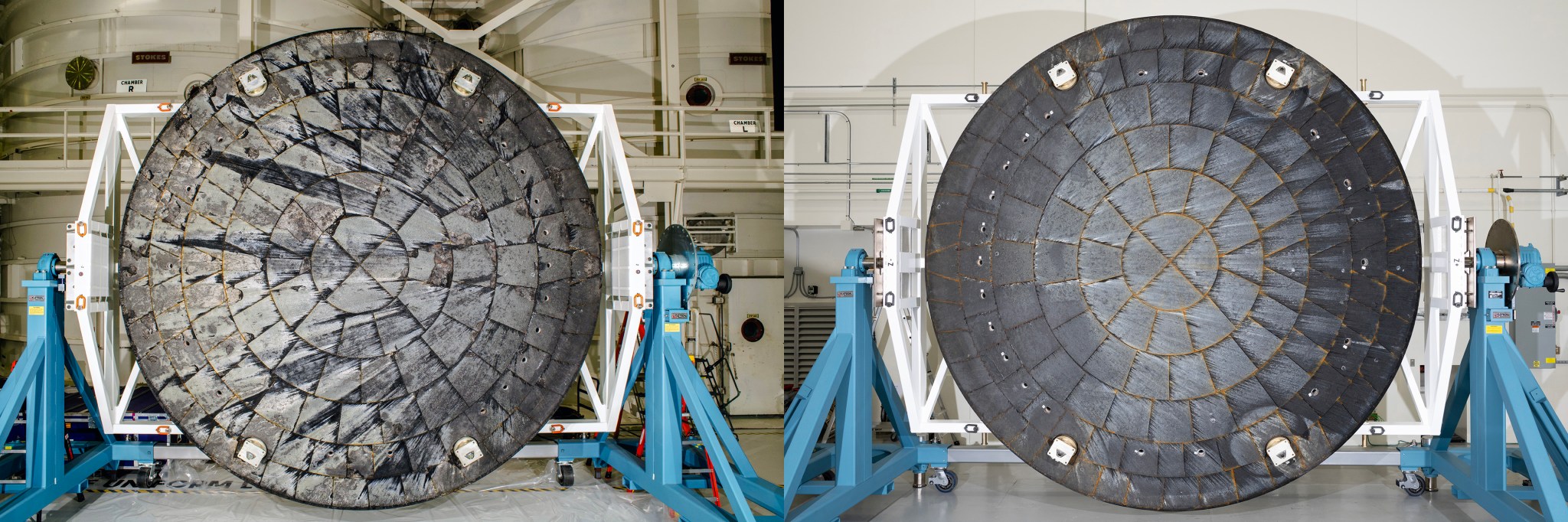
Following Artemis I, NASA modified Orion's reentry trajectory to shorten the maximum downrange distance between atmospheric entry and splashdown in the Pacific Ocean. This change was intended to limit the time the heat shield spent in the temperature range where issues were observed during the first test flight. Post-mission, Orion's heat shield was inspected underwater by U.S. Navy divers, revealing a significant reduction in cracks and char loss compared to the Artemis I heat shield.
Further examination at NASA's Marshall Space Flight Center in Huntsville, Alabama, included internal x-ray scans and sample extraction from the 186 unique blocks of Avcoat material that made up the heat shield. Analysis showed that the shorter downrange distance during entry reduced cracking and char loss on Artemis II by a factor of ten compared to Artemis I. Only nine spots of char loss were found on the Artemis II heat shield, while Artemis I had 103 instances.
These findings demonstrated the effectiveness of the trajectory modification and the robustness of Orion's heat shield design, maintaining consistent performance from the first Artemis mission to Artemis II.
Written by urgent.news from NASA's reporting — not their text. Machine-written — may contain errors; check the original before relying on it.
This story
This is one outlet's version. Read the fullest account.