Proof-based general-purpose computing with Magnetar
Zero-knowledge proofs can verify computing results without rerunning workloads or exposing sensitive data. Magnetar helps bring them into the mainstream with support for standard programming languages, major speed gains, and quantum-resistant security. The post Proof-based general-purpose computing with Magnetar appeared first on Microsoft Research .
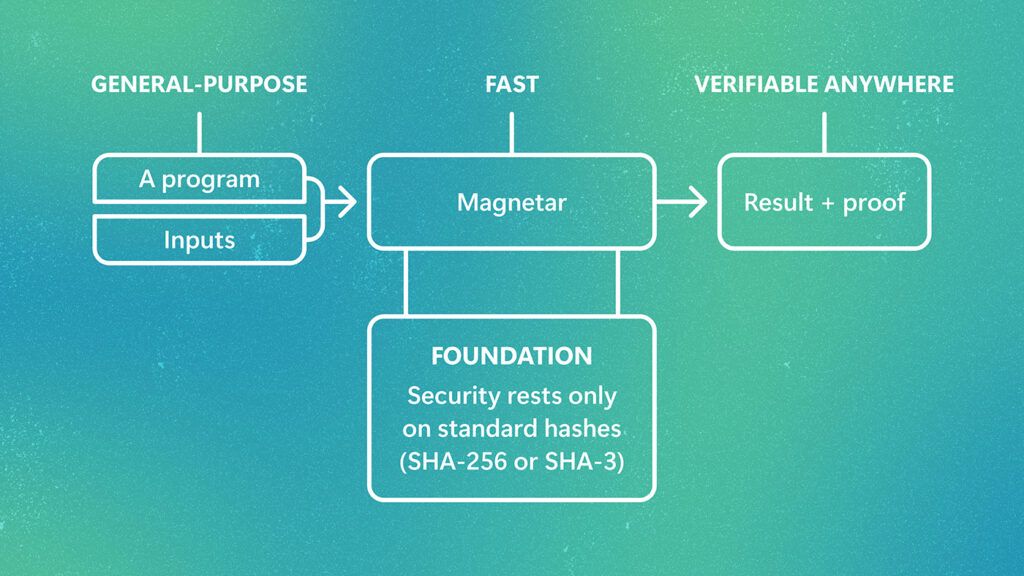
At Microsoft Research, over a decade of work has been invested in making zero-knowledge proofs and verifiable computing practical. Prior attempts had focused on small programs and introduced compromises in efficiency, usability, or security. The latest breakthrough from Microsoft Research, known as Magnetar, addresses these three challenges simultaneously.
Magnetar enables the creation of proofs for programs written in Rust, Go, or C. On average, it runs 10 to 39 times faster than the fastest prior systems. Its security rests solely on standard hash functions, ensuring it remains trustworthy even decades into the future. Moreover, Magnetar's proof generation and verification processes are streamlined, making it possible for normal programs to utilize zero-knowledge proofs without requiring cryptographic expertise.
The impact of Magnetar extends to various domains. For instance, an AI agent acting on someone's behalf could append a proof that each action adhered to the policy it was given. Regulated financial institutions could demonstrate the correct processing of transactions without exposing sensitive information. By verifying a result based on the accompanying proof, correctness no longer needs to be contingent on the trustworthiness of the program's producer.
Written by urgent.news from Microsoft Research's reporting — not their text. Machine-written — may contain errors; check the original before relying on it.