On this day: Germany introduces the Rentenmark to curb hyperinflation
On this day, 15 October 1923, Germany introduced the Rentenmark to curb hyperinflation, and it worked. Eliot Wilson tells us more.
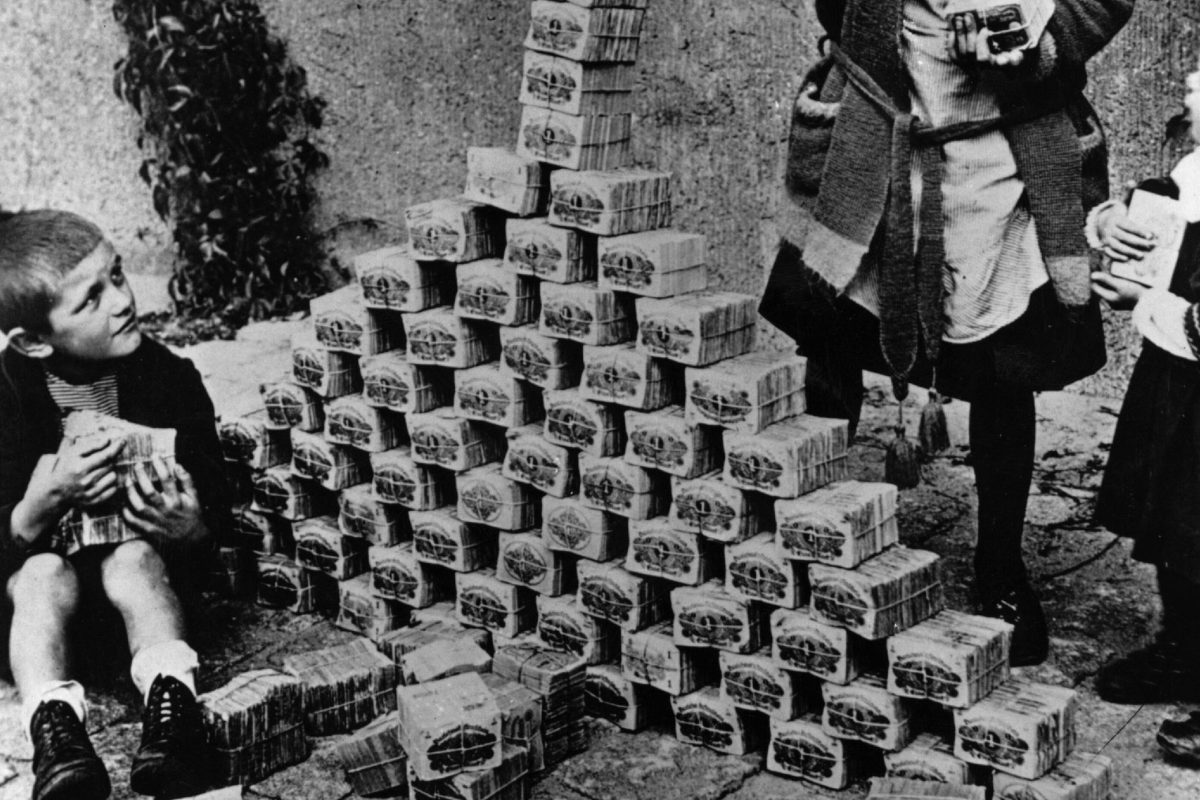
On October 15, 1923, Germany adopted the Rentenmark as a means to combat hyperinflation, and it proved successful. Weimar Germany evokes various images, including the lively and debauched atmosphere of Cabaret, the republic's instability (with 14 chancellors between 1918 and 1933), street violence, and the impending arrival of Adolf Hitler.
Hyperinflation was a significant issue during the early years of the new state. Germany had financed its war efforts through borrowing, and by 1918, it owed 156 billion Marks. The Treaty of Versailles, signed in June 1919, ended the war and held Germany responsible for reparations. By May 1921, Germany was assessed to owe 132 billion Marks, payable over 42 years.
The German government was already in arrears, able to pay only 7.5 billion of the initial 20 billion Marks. The national debt had already caused high inflation rates, which seemed to stabilize but then worsened. German industrialist Walther Rathenau, serving as foreign minister, was assassinated in 1922, causing the republic to lose confidence.
In January 1923, French and Belgian forces occupied the Ruhr Valley, leading to a strike by German workers. The Reichsbank then printed more paper money, exacerbating hyperinflation. In 1923, a loaf of bread that cost 160 Marks at the end of the year increased to 200 million Marks a year later. Many workers were paid twice daily, causing prices to fluctuate drastically.
The economy became irrational and unstable. Karl Helfferich proposed a solution: replace the Mark with a currency tied to tangible assets. Gustav Stresemann, appointed chancellor in August 1923, appointed Hans Luther as finance minister. Luther introduced the Rentenmark, indexed to mortgaged industrial and agricultural property.
On October 15, 1923, Luther established the Deutsche Rentenbank to manage the new currency, which was introduced the following month. The public quickly gained confidence in the Rentenmark, as its supply was fixed and its backing appeared solid. By November, the dollar's purchasing power had decreased from 4.2 Marks in 1914 to 4.2 trillion Marks.
Written by urgent.news from City AM's reporting — not their text. Machine-written — may contain errors; check the original before relying on it.