No, Rising Bond Yields Did Not Trigger the GFC
The first few times I saw mention of the GFC being caused by rising bond yields, I let it go. I assumed it was hyperbole or perhaps an inartfully phrased diatribe. But this week, I read the following sentence: “That, after all, is what happened when the 10-year crashed through 5% to trigger… Read More The post No, Rising Bond Yields Did Not Trigger the GFC appeared first on The Big Picture .
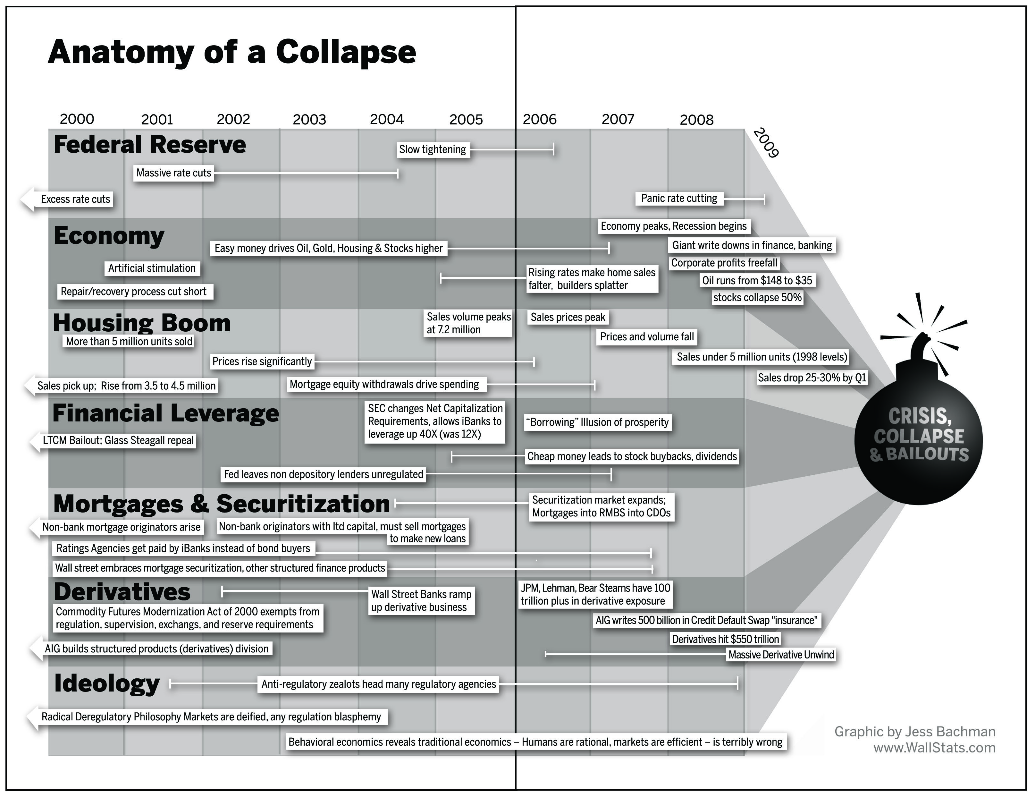
A common assertion claims that rising bond yields sparked the Global Financial Crisis (GFC). However, this perspective is misleading and reflects a misunderstanding of the crisis' true causes. To clarify, let's examine the facts in chronological order. From June 2007, the 10-year Treasury yield surged, peaking at 5.26% on June 12th.
This marked a dramatic increase beyond the previous high of 5% since 2002. Consequently, mortgage rates rose to 6.7%, contributing to the Bear Stearns hedge funds' implosion later that month. Yet, the root trigger remains absent in this narrative. Instead, focus on the following key factors prior to the 2007 yield increase: home prices peaked a year earlier, Bear Stearns' subprime charges materialized months prior (February 2007), New Century filed bankruptcy in April, and ABX indices had been in decline since January.
These events demonstrate that subprime issues were already widespread, driven by no-doc underwriting and credit quality deterioration. Moreover, CDO leverage existed well before the 10-year yield neared 5%. Bear Stearns' implosion, for instance, was attributed to leveraging on collapsing subprime CDO collateral, not the Treasury sell-off.
It's crucial to note that a 5% yield on the 10-year was not exceptional in 2007. The yield surpassed 5% for six weeks, equivalent to the 12-month period in June/July 2006, when rates were around 5.25%, without triggering any crisis. Furthermore, historical data from 1975 to 2000 reveals that the 10-year averaged over 8% and 30-year fixed mortgages reached 10% without any issues.
Under normal economic conditions, yields rising above 5% do not lead to mortgage stress or financial fragility. However, in a scenario where leverage had become excessive and toxic, circulating through securitized subprime junk, combined with abandoned traditional lending standards, higher rates could exacerbate existing vulnerabilities.
The primary catalysts for the GFC, however, were large-scale leverage, no-doc loans, ultra-low rates, and radical deregulation. It's unfortunate that many sought to deflect blame from their own professional misconduct onto external factors like bond yields. Unfortunately, this faulty narrative continues to be perpetuated, even as bond market behavior mirrors pre-crisis patterns (Yahoo, October 8, 2026).
Written by urgent.news from The Big Picture's reporting — not their text. Machine-written — may contain errors; check the original before relying on it.