Nikkei, Kospi, Topix: Sorge um KI und US-Inflation – Aktienkurse in Asien stürzen ab
Gute Bilanzergebnisse vertreiben die Sorgen der Anleger nicht mehr. Ein tiefer Vertrauensverlust treibt die Chipwerte in Südkorea und Japan weiter nach unten – und damit auch die Indizes.
Fears surrounding the artificial intelligence boom have accelerated the sell-off on Asian stock exchanges. Beyond doubts about the profitability of AI data centers and their suppliers, the semiconductor industry, falling stock prices on Wall Street and inflation data from the United States have clouded market sentiment. The Kospi fell to 5,568 points by 11:14 a.m. local time, primarily due to the two leading memory chip manufacturers: Samsung Electronics, which lost more than eight percent of its value, and SK Hynix, which fell by more than ten percent.
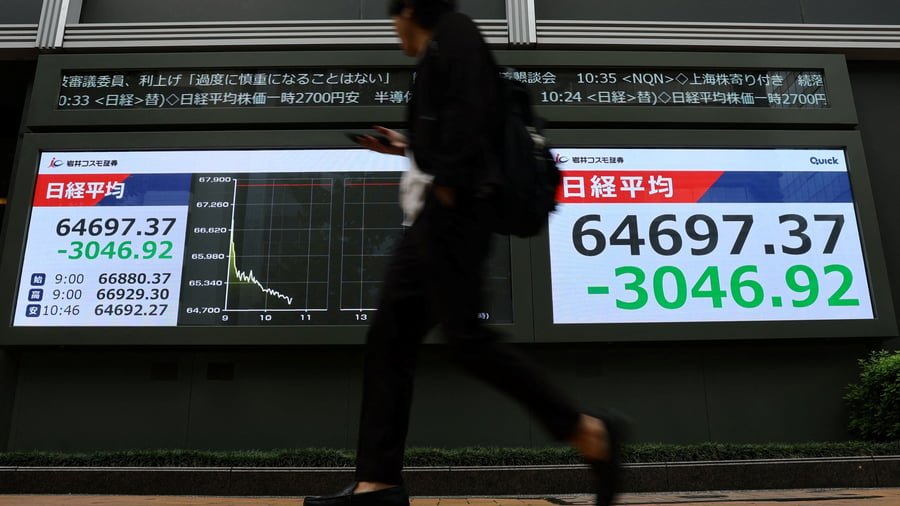
The Nikkei-225, while not as heavily weighted with chip values as the Kospi, fell to 64,489 points around lunchtime. Japan's memory chip manufacturer Kioxia contributed significantly with a loss of around eleven percent. The broader Topix index, however, only dropped by 2.5 percent to 3,993 points, as sectors such as retail, pharmaceuticals, and transportation saw declines.
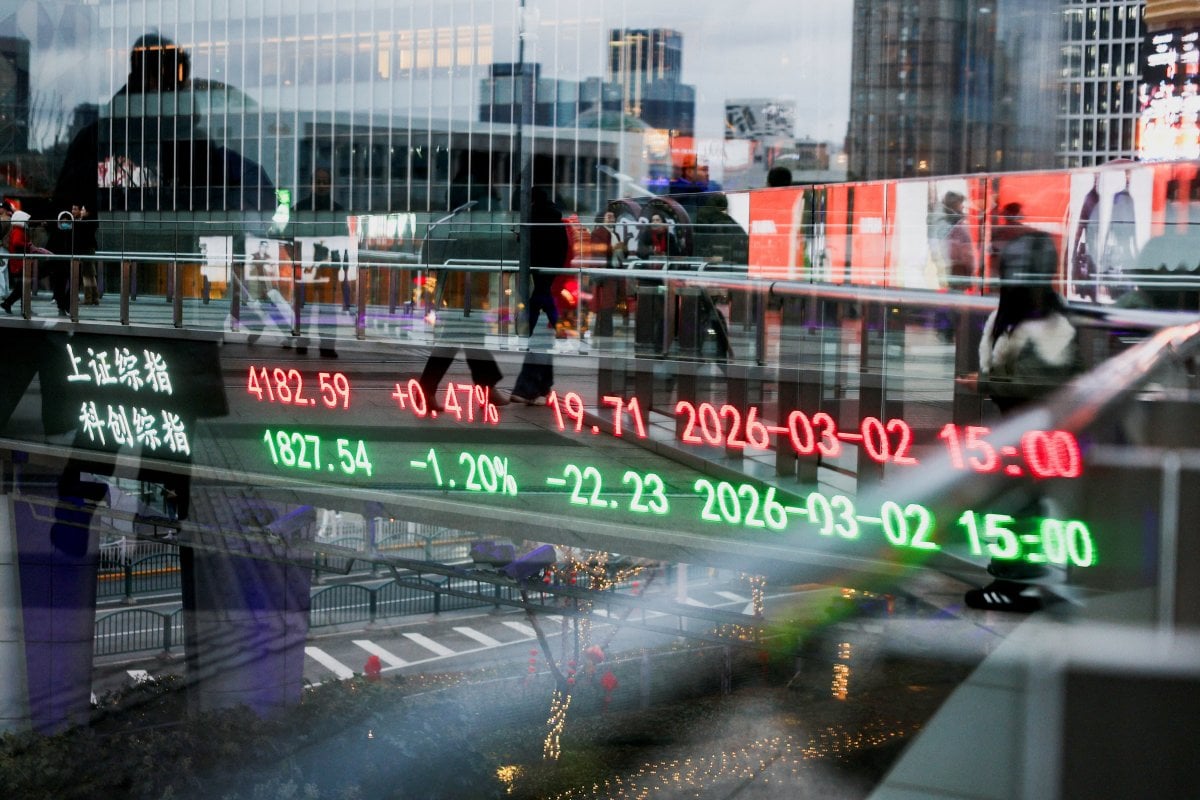
Other Asian exchanges also felt the pressure, with the Straits Times Index in Singapore and the Hang Seng Index in Hong Kong losing around one percent in the first 90 minutes of trading. The Shanghai Composite Index fell by 1.4 percent. While some investors hope TSMC's quarterly results could boost sentiment, Fumio Matsumoto, chief strategist of Japanese broker Okasan Securities, expects even strong results to fail in dispelling investor doubts about the AI boom.
TSMC's strong performance is already anticipated, according to Matsumoto. The market may not rise significantly in the upcoming reporting season. Shingo Ide, chief equity strategist at Nippon Life Insurance's research institute (Nissay), warned of a subtle unease that could drive stock prices down. Major news such as a move by Chinese memory chip manufacturers or a US inflation rate above expectations could trigger a wave of profit-taking, he said in an online comment for Nikkei's business newspaper.
The paradox is that despite the US consumer price index increasing by only 0.1 percentage points above expectations in September, Ide argues that investors wouldn't have dismissed it as "near to expectations." He warns that the Nikkei's 65,000-point benchmark could be breached as a floor, potentially falling to around 60,000 points if foreign investors' selling pressure increases.
This level was last seen in May, shortly before investors drove chip manufacturers' and their suppliers' stocks to unprecedented highs. Such a reversal would be abrupt, as the index had recovered to over 70,000 points just last week. Foreign currency and bond markets also reflected concerns about the US economy and European debt.
The dollar fell by 0.4 percent to 157.70 yen, while the euro also weakened against the yen, ending at 177.09 yen, compared to 170.09 yen the previous day. Japanese government bond yields, or JGBs, continued to decline, with the yield on 10-year JGBs dropping by 0.065 percentage points to 2.93 percent. Yen had been stronger by ten Yen at the end of July.
Moreover, bond yields have been falling. Naka Matsuzawa, bond strategist at Japanese investment bank Nomura, sees a shift in sentiment: In Japan, rising yields would no longer be driving down stock prices, but falling stock prices could be pushing yields down.
Written by urgent.news from Handelsblatt's reporting — not their text. Machine-written — may contain errors; check the original before relying on it.