Ministry seeks cut in wheat seed prices
ISLAMABAD: The Ministry of National Food Security and Research has urged private seed companies to reduce wheat seed prices to make them more affordable for farmers ahead of the Rabi sowing season, which begins in the coming weeks. National Food Security Minister Rana Tanveer Hussain chaired a meeting on Wednesday with representatives of private seed companies and the National Seed Development…
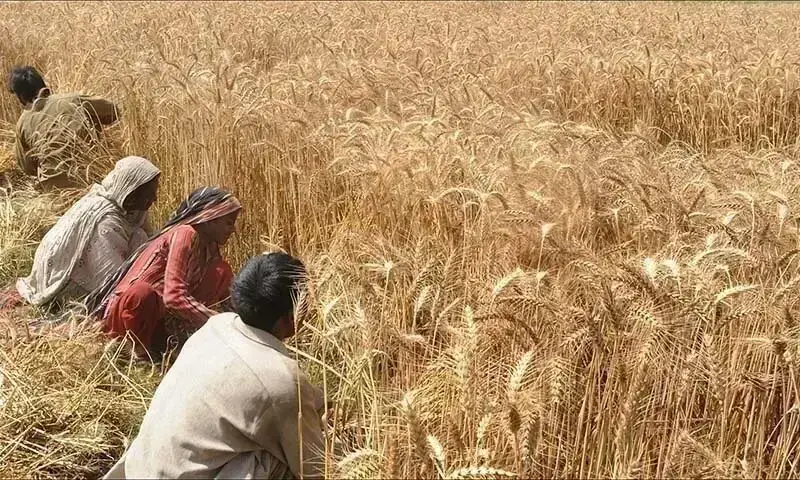
The Ministry of National Food Security and Research in Pakistan is lobbying private seed companies to lower wheat seed prices, aiming to make them more accessible to farmers in preparation for the upcoming Rabi sowing season. This initiative comes as the government pushes for the adoption of certified, climate-resilient, high-yielding, and disease-resistant wheat varieties through improved research and seed production programs.
During a meeting held recently with representatives from private seed companies and the National Seed Development and Regulatory Authority (NSDRA), National Food Security Minister Rana Tanveer Hussain emphasized the importance of reducing seed costs and ensuring a steady supply across all provinces. This move is crucial to support timely wheat planting and bolster national food security, according to a press release.
The minister highlighted that inadequate use of certified wheat seed is a significant hurdle to wheat production. He stressed the importance of making high-quality seed readily available and timely to particularly small farmers, whose purchasing decisions are influenced by the aggregated costs of seed, fertilizers, irrigation, and other farming expenses.
Mr. Hussain directed the NSDRA to facilitate smooth inter-provincial movement of wheat seed, with the coordination of provincial authorities and seed suppliers being vital to overcoming any movement-related challenges and ensuring seed reaches farmers in time for the sowing season. As of the 2026-27 Rabi crop season, wheat seed procurement availability stands at 611,793.06 tonnes, covering 51 percent of the total seed demand of 1,191,555 tonnes.
However, the distribution remains uneven, with Punjab leading at 553,008.75 tonnes (67 percent), followed by Sindh at 40,873.89 tonnes (23 percent), Khyber Pakhtunkhwa at 7,458.62 tonnes (7 percent), and Balochistan contributing 10,451.80 tonnes (13 percent). For the Rabi season of 2025-26, total seed availability for sowing was 574,329.53 tonnes, accounting for 51 percent of the requirements.
Written by urgent.news from Dawn Business's reporting — not their text. Machine-written — may contain errors; check the original before relying on it.