Mercury's Hidden Surface Wrinkles Suggest the Planet Shrank More Than Previously Thought
Learn how asteroids may have erased evidence of the planet’s contraction.
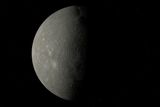
Mercury, the innermost planet in our solar system, has been shrinking due to the cooling of its interior over the past 4.5 billion years. This process creates wrinkle-like features called shortening structures across its surface. Previous studies have used these signs of aging to calculate how much Mercury has contracted, providing insights into the early history of the solar system.
However, a new study published in Geophysical Research Letters suggests that the extent of Mercury's shrinkage may have been underestimated by up to 10 to 30 percent. This is because the wrinkles are often obscured by impact craters and asteroid debris, making them difficult to detect. The researchers created a map of Mercury's surface roughness to better understand the extent of the surface deformation, revealing that shortening structures are less common in rough terrain.
This indicates that many wrinkles have been obscured by resurfacing events like asteroid impacts. The new study revises the previous estimate of Mercury's contraction from as much as 9 miles to more than 14 miles. The researchers argue that their calculation may still underestimate the effect, as Mercury's tectonic record is not as well-preserved as expected.
Nonetheless, the findings provide new insights into the planet's interior composition and evolution, and highlight the importance of considering surface roughness in future studies of rocky worlds, including Mars, the Moon, and exoplanets.
Written by urgent.news from Discover Magazine's reporting — not their text. Machine-written — may contain errors; check the original before relying on it.