KPMG’s CEO on why AI safety isn’t another Y2K and why business leaders are thinking hard about talent right now
Some 53% of CEOs surveyed say they’re planning reductions in some areas — but 86% are redesigning roles, career paths and team structures.
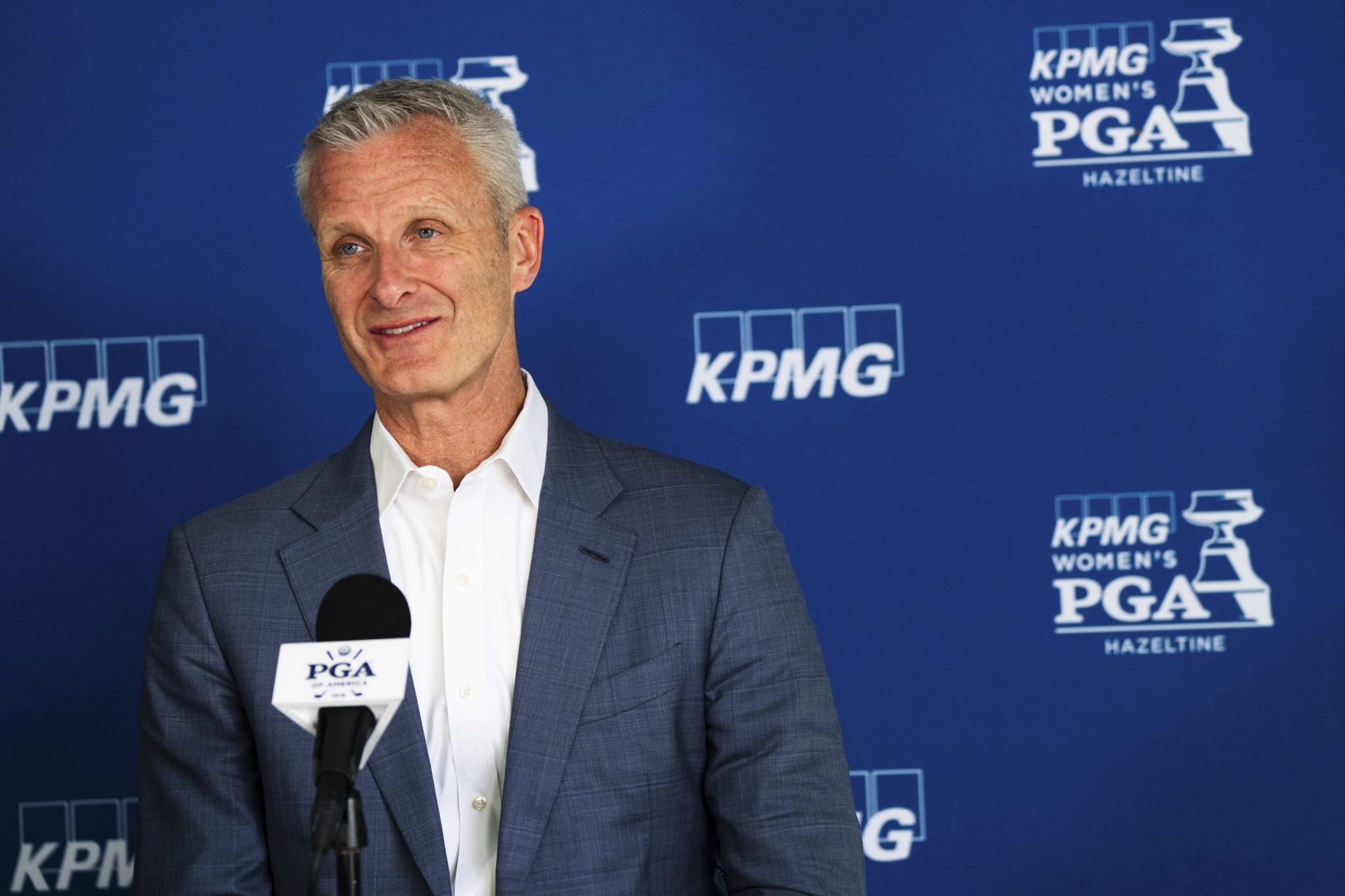
On New Year's Eve 1999, while many anxiously awaited the potential fallout of the Y2K bug, Tim Walsh found himself contemplating an apartment near Times Square. "Probably not the smartest place to be if the whole world was going to come to a stop," he remarked. Midnight passed without incident, and Walsh, now KPMG's U.S. chair and CEO, does not believe AI poses the same catastrophic risk.
"I don't think AI is Y2K," he told Fortune ahead of KPMG's 2026 U.S. CEO Outlook release. "Something’s happening and it's really, really big." Cybersecurity emerged as the top concern among CEOs, with 85% predicting it would impact their organization's prosperity within the next three years, even more so than inflation, geopolitics, or the speed of technological advancement.
Forty-eight percent of CEOs are ramping up cyber investments over the next three years, the highest percentage for any risk, and 56% identified cybersecurity as a challenge in deploying AI, surpassing ethics, data readiness, and cost concerns. AI was a significant factor in CEOs' increased spending on cyber, with 78% citing AI-powered social engineering and targeted attacks, 76% mentioning AI-assisted malware or phishing, and 73% highlighting data and privacy risks from deploying AI agents.
Walsh, who recently met with frontier model developers on the West Coast, emphasized that KPMG is collaborating with alliance partners to develop cyber defense models, recognizing the opportunity and necessity for businesses. "There's a ton of cyber risk in the infrastructure that's out there currently," he noted, attributing it to the decades-old nature of the infrastructure.
KPMG sees this as a multi-billion dollar business opportunity, which they plan to pursue. Walsh expressed optimism that CEOs are already moderating model deployment due to safety concerns, contrasting this view with those who believe a disaster is needed to enforce regulations. Quantum computing posed a risk to encryption for many CEOs, yet only 4% had implemented plans to address it.
Thirty-four% attributed some cybersecurity investments to the threat of quantum attacks on encryption, while another 20% were increasing spending to comply with U.S. executive orders requiring a transition to post-quantum cryptography by 2030 or 2031. KPMG's survey revealed that CEOs are navigating a dual strategy, with 53% planning workforce reductions while 86% are redesigning roles and career paths to promote human-AI collaboration.
Eighty-three% are prioritizing retaining and retraining high-potential talent, and 79% are hiring individuals with AI and technology skills. Walsh cautioned against taking the percentages at face value, stating that businesses are primarily seeking productivity gains in certain operations, allowing for fewer employees or expanded capabilities.
At KPMG, Walsh observed a shift in the firm's workforce mix, with a greater emphasis on engineers and AI-skilled personnel. The firm is investing in training its own staff rather than relying on external hires. Despite the firm's expansion, Walsh reported that there has not been a significant reduction in headcount. KPMG has been utilizing AI agents in various platforms, such as its audit platform Clara and tax advisory platform Digital Gateway, for years, enabling employees to complete tasks more efficiently and analyze extensive datasets.
However, the human element remains essential, as Walsh highlighted that the technology is evolving rapidly, and his firm launched a client technology and innovation unit to innovate and fail faster. Walsh expressed impatience with keeping the firm's 50,000 U.S. employees ahead of clients on technology, acknowledging the need for different tools and approaches for various teams.
Written by urgent.news from Fortune's reporting — not their text. Machine-written — may contain errors; check the original before relying on it.