How Prehistoric People Survived After One of the Worst Volcanic Eruptions in History
It’s a story of human resilience The post How Prehistoric People Survived After One of the Worst Volcanic Eruptions in History appeared first on Nautilus .
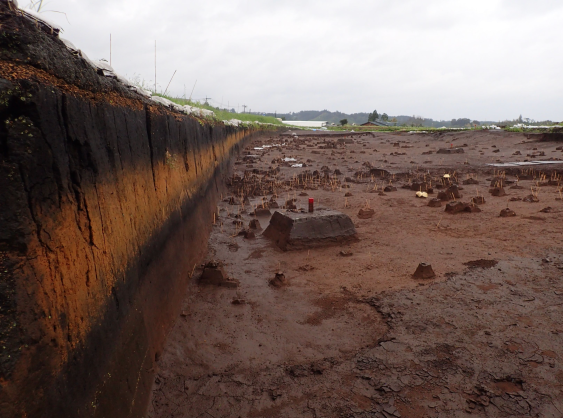
Around 5,250 BCE, a colossal volcanic eruption known as the Kikai-Akahoya shook Japan's southernmost island of Kyushu. This catastrophic event, rated seven on the Volcanic Explosivity Index, unleashed powerful earthquakes, massive tsunamis, and a thick blanket of volcanic ash across the region. Archaeologist Peter Jordan from Lund University described the eruption as "devastating," noting its immediate impact on the Japanese islands.
Traditionally, it was believed that the eruption led to the immediate annihilation of local Jomon hunter-gatherer groups. This idea was supported by the appearance of a distinct layer of volcanic ash in the archaeological record, separating one style of pottery from another, marking a disappearance of a culture. However, a new perspective has emerged. Despite the devastation, some pottery styles managed to endure, leading to the "Jomon survival" hypothesis.
A recent study in Science Advances by an international team of archaeologists provides a more nuanced understanding of the eruption's impact on population numbers across Japan. By analyzing radiocarbon dating data, the researchers estimated changes in population using the frequency of radiocarbon dates as a proxy for population size. Their findings suggest a more complex scenario than simple annihilation or continuity.
The team found that Jomon populations experienced a sharp decline in the immediate vicinity of the eruption but actually increased in nearby areas. This suggests that the region was sparsely populated at the time of the event, making it more resilient to the disaster. Moreover, populations near the northern coastline grew despite the ecological destruction of the countryside, possibly due to a less severe impact on the marine ecosystem.
These findings indicate that survivors of the eruption managed to migrate, establish new social relations, and adapt to the post-disaster conditions. Study author Enrico Crema from Cambridge University highlighted the significant loss of life caused by the disaster, but also emphasized the remarkable resilience of the Jomon people.
They not only survived the catastrophe but also found innovative ways to thrive in the new environment. The Kikai-Akahoya eruption, while a devastating event in prehistoric Japan, also reflects the remarkable ability of humans to adapt and persevere in the face of catastrophic natural events.
Written by urgent.news from Nautilus's reporting — not their text. Machine-written — may contain errors; check the original before relying on it.