Houthis make ‘major leap’ building advanced missiles with greater Middle East range
Yemen's Houthis have made a “major leap” in locally producing sophisticated ballistic missiles using components imported from China , an arms intelligence report has revealed. Experts have also told The National that the militia's manufacturing was becoming increasingly sophisticated. Its engineers have developed the Palestine-2 missile that has the capability to manoeuvre during its terminal…
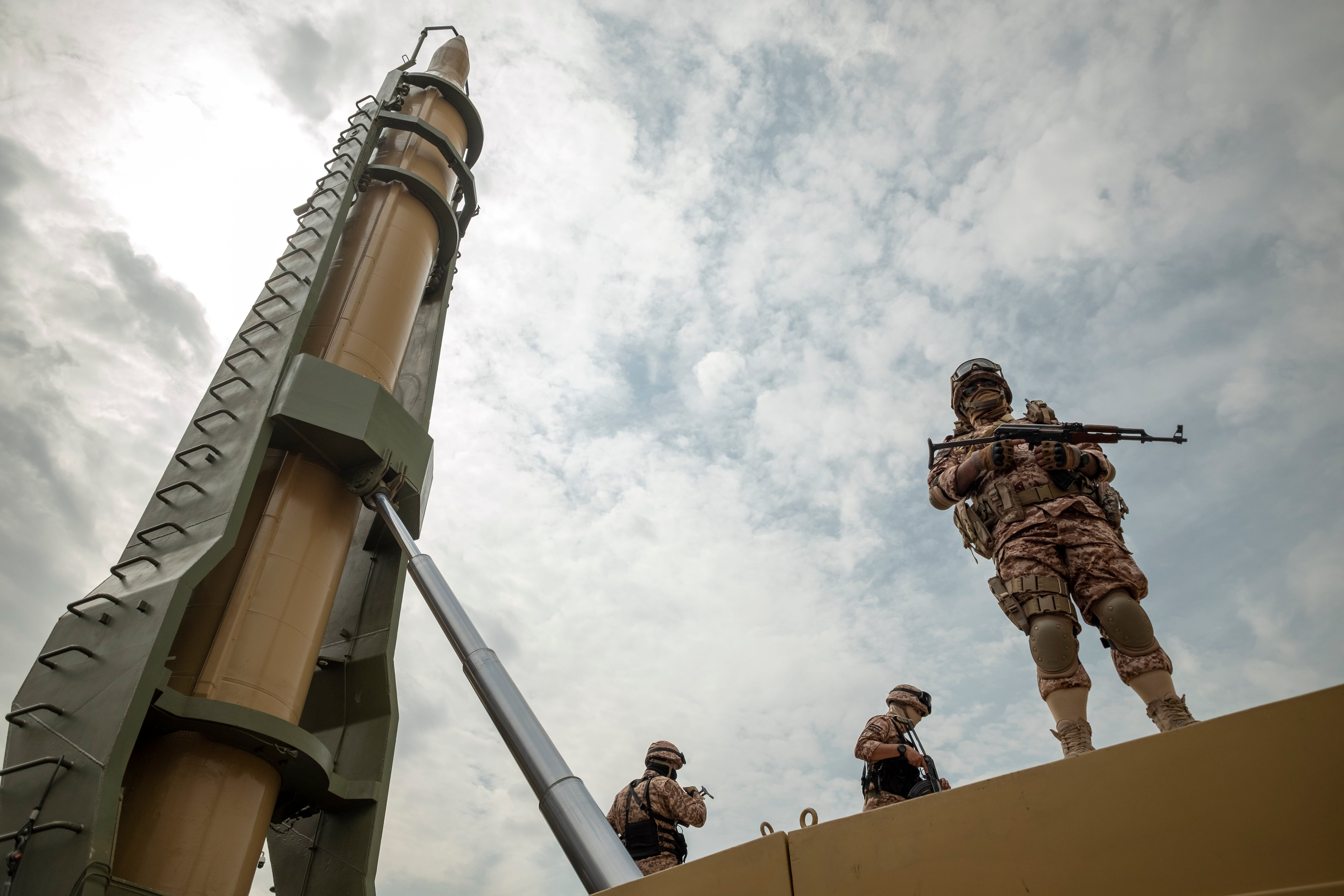
Yemen's Houthis have made significant advancements in their production of advanced ballistic missiles, boasting a range capable of reaching much of the Middle East, according to an arms intelligence report. The report, shared with The National, reveals that the conflict group has made a "major leap" by incorporating components imported from China into their missile manufacturing process.
The Conflict Armament Research report examined weaponry from an intercepted shipment heading to the Houthi-controlled port of Hodeida, discovering highly specialized machined parts essential for stabilizing fins and hypersonic flight. These components indicate the Houthis' growth in their ability to produce the Iranian-made Kheibar Shekan series of ballistic missiles. The specialized parts from China suggest the rebels have expanded their supply chains beyond their traditional Iran-linked networks.
The Palestine-2 missile variant, developed by the Houthis, possesses the ability to maneuver at speeds of 6,000 kilometers per hour during its terminal stage, allowing it to evade defenses. This missile has a range of 1,800 kilometers, making it a threat to various regions in the Middle East. While the Houthis may not have fully mastered the technology for the Kheibar Shekan ballistic missile, experts from Kings College London suggest that Iranian expertise on the ground is accelerating their progress.
The primary obstacle for the Houthis is the limited number of missiles they can produce, rather than technical limitations. Dr. Nawaf Obaid, a professor at Kings College London, emphasized that while the kingdom's air defenses have been performing exceptionally well, the Houthis exploited a gap between Saudi Arabia's lower and middle air defense layers during the Riyadh airport attack, which resulted in the deaths of 13 people.
Written by urgent.news from The National UAE's reporting — not their text. Machine-written — may contain errors; check the original before relying on it.
This story
This is one outlet's version. Read the fullest account.
- Yemen's Houthis look to build ballistic missiles with more Chinese supplies: report gulfnews.com
- Houthis make ‘major leap’ building advanced missiles with greater Middle East range thenationalnews.com
- Alleged Chinese spies targeted former premier and AFP commander via LinkedIn abc.net.au
- Yemeni foreign minister discusses Houthi use of Chinese technology with Beijing english.ajel.sa
- Yemen’s Houthis look to build ballistic missiles with more Chinese supplies, report says winnipegfreepress.com