Haze: Over half the size of Perlis burnt in Kalimantan
PETALING JAYA: A total of 60 cloud-seeding flights had been carried out nationwide as of Monday to address dry weather and the effects of haze.
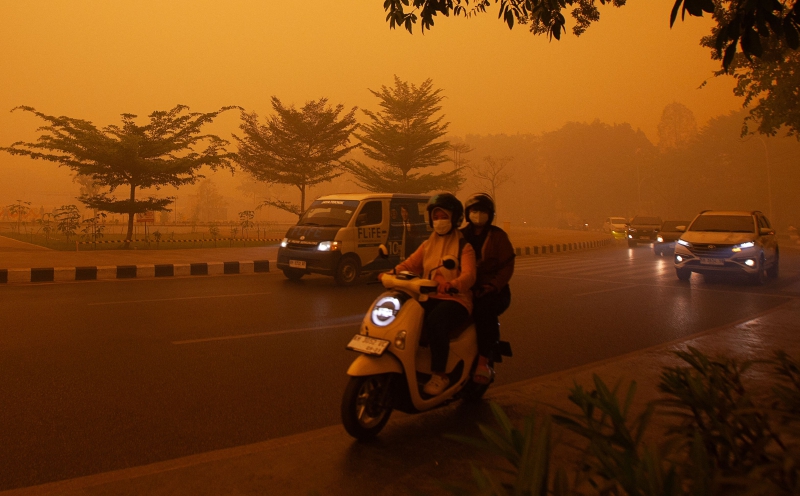
PETALING JAYA: Malaysia's Meteorological Department carried out 60 cloud-seeding flights nationwide on Monday to combat dry weather and the resulting haze, according to director-general Dr Mohd Hisham Mohd Anip. These operations aimed to increase rainfall in areas suffering from shortage, support water resource management, and mitigate the effects of haze.
Meteorologists assess the suitability and timing of these operations based on factors like cloud conditions, moisture content, wind direction and speed, atmospheric stability, and weather system movement. The operations have a success rate of over 90% in inducing rain, which is assessed through rainfall recorded in targeted areas after operations and data from meteorological observation stations.
However, natural rainfall can also occur without cloud seeding. Meanwhile, forest fires in Kalimantan, Indonesia, have devastated an area more than half the size of Malaysia's smallest state, Perlis. West Kalimantan alone accounted for 67.1% of the total affected area. Environmental expert Professor Dr Haliza Abdul Rahman highlighted the significant environmental impact of these fires, noting that burning peatland can produce long-lasting smoke that can spread across international borders, affecting air quality in Malaysia and Singapore.
Climatologist Prof Dr Fredolin Tangang predicted hot and dry conditions would persist in Kalimantan and Sumatra, increasing the risk of future fires.
Written by urgent.news from New Straits Times's reporting — not their text. Machine-written — may contain errors; check the original before relying on it.