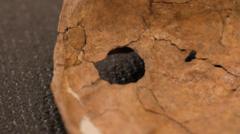
Fatal Neanderthal wound may be earliest evidence of a wooden spear attack on a human ancestor
A round hole in the shoulder blade (scapula) of a Neanderthal whose partial remains were unearthed in a cave in Iraqi Kurdistan may be the earliest known example of lethal interpersonal violence with a wooden spear in the hominin fossil record.

A Neanderthal who died 75,000 years ago in Shanidar Cave, Iraq, may have been killed by a wooden spear that pierced his chest, according to archaeologists. The hole in his shoulder blade and the force needed to create it suggest the wound was a targeted kill shot aimed at the heart. The location of the injury and the severity of the damage indicate the Neanderthal was killed by a spear, likely from the front at high velocity.
Evidence of traumatic injuries on the Neanderthal's teeth suggests he received care and support from other members of his species during his life, despite his life-threatening injuries. The discovery of two other Neanderthals with similar fatal injuries at Shanidar suggests the site held significant meaning for these ancient humans.
Written by urgent.news from Live Science's reporting — not their text. Machine-written — may contain errors; check the original before relying on it.
This story
This is one outlet's version. Read the fullest account.