EU-Regulierung: Nächste Schlüsseltechnologie in Chinas Fokus: Wärmepumpen-Hersteller suchen Übernahmeziele in Europa
Die Kommission will Fördergelder für Technologie aus China reduzieren – und löst damit in der Volksrepublik ernste Sorgen aus. Unternehmen loten aus, wie sie in Europa produzieren können.
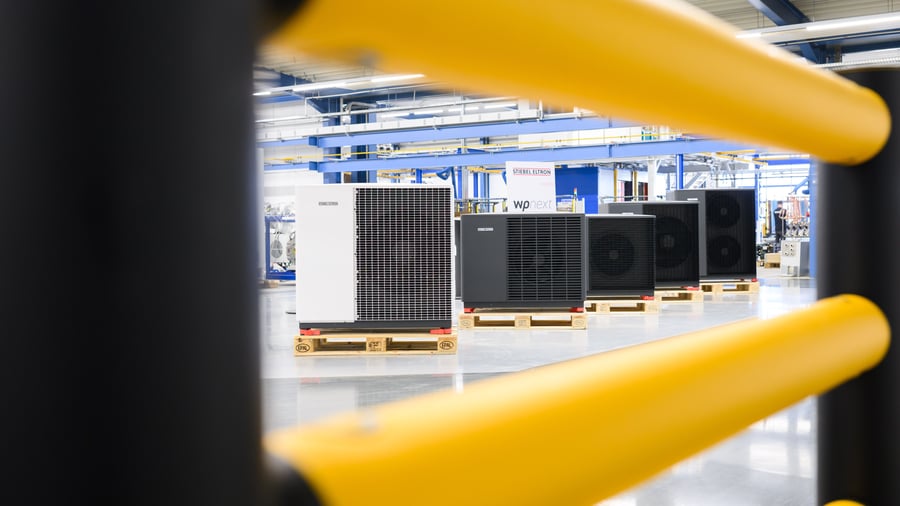
Numerous Chinese manufacturers of heat pumps are reportedly considering taking over or significantly investing in European manufacturing facilities. This has alarmed European Union (EU) representatives, who recognize that protecting control over the next major key technology and preserving industrial sovereignty is crucial. According to Nicholas Matten, an industry advisor and former CEO of Stiebel Eltron, at least three Chinese groups are actively seeking European heat pump factories.
They have been approached by companies in the People's Republic of China for advice on the European heat pump market. Paul Kenny, the General Director of the European Heat Pump Association (EHPA), stated that Chinese manufacturers are currently exploring options for producing heat pumps in Europe, either by purchasing European companies or facilities.
Some Chinese conglomerates are already discussing these plans with European businesses. Anna Cavazzini, a European Parliament member representing the Greens, warns of the consequences. She fears that Europe has already lost its technological leadership in solar energy and batteries, and now relies heavily on Chinese products. She insists that we must prevent this dependency from extending to heat pumps.
The upcoming EU Industrial Accelerator Act (IAA) is a potential trigger. Presented by the EU Commission in March, the draft law seeks to strengthen the EU in strategic industries and allocate most state funding to European technologies. Under the IAA, state subsidies for climate-friendly technologies like heat pumps will depend on whether the equipment has its origins in the European Union.
In other words, if an individual wishes to install a heat pump, state funding will only be provided in full if the heat pump originates from the EU. If it comes from China, the subsidy will be either completely withdrawn or reduced. The regulation is expected to take effect three years after the law's implementation and only if a state introduces or revises a new subsidy.
However, it remains unclear what specific conditions must be met for a heat pump to have its origin in the EU. While the final EU rules on this matter may still be pending, individual EU states have already imposed restrictions on Chinese products. For instance, Italy's government is preventing Chinese takeovers, such as preventing Chinese conglomerates Haier and Midea from buying the Italian heating company Riello.
France has already introduced a rule, effective from September 1, that only promotes heat pumps produced in EU countries or the European Economic Area. Italy's government has even blocked a deal between Chinese companies Haier and Midea and the American owner Carrier, which involved the Italian company Ariston. Chinese firms are understandably extremely concerned about these developments.
Nicholas Matten and Paul Kenny reported feeling a great sense of unease after visiting the Chinese heat pump industry's annual conference in Wuhan in July. The Chinese heat pump industry association invited European participants to build connections and assess how to maintain open European sales channels for Chinese heat pumps. Matten noted that the Industrial Accelerator Act is causing extreme alarm among Chinese businesses.
While Chinese companies might not be eager to establish their own production sites in Europe due to lengthy approval processes, they are actively seeking opportunities to rapidly expand heat pump production in existing facilities, either through cooperation with European firms or by purchasing and repurposing factories. Kenny also believes that the impact of the Industrial Accelerator Act will become apparent, potentially leading to more mergers and acquisitions between the Chinese and European heat pump sectors.
Major Chinese heat pump manufacturers are refraining from commenting on the topic, with Haier and Midea declining to respond and Gree and Phoenix refusing to answer inquiries.
Written by urgent.news from Handelsblatt's reporting — not their text. Machine-written — may contain errors; check the original before relying on it.