CONSTITUTION @ 30: ‘The judges in green’ — The story behind the Constitutional Court’s iconic robes
At one of the first meetings of the Constitutional Court, its president, Arthur Chaskalson, tasked Justices Albie Sachs and Yvonne Mokgoro with ‘décor’ and gave them R10,000. That’s where the story of the court’s iconic green robes begins.
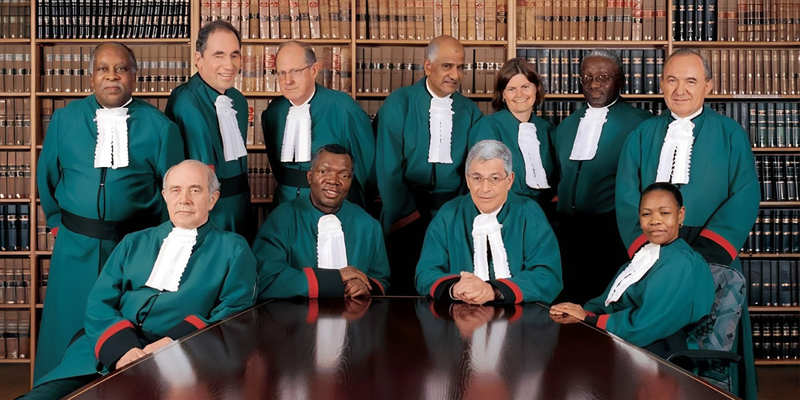
Three decades ago, South Africa’s Constitutional Court sought to establish a unique identity for its new institution. The judges, Albie Sachs and Yvonne Mokgoro, were tasked with creating an iconic visual representation of the court. Frustrated by being disparagingly called "judges in green gowns," they decided to turn the criticism into an opportunity.
Originally, judicial robes were typically black or red, colors associated with the established judiciary. However, the founding judges wanted their court to look different from the existing legal system.
The decision to adopt green robes emerged from a desire to distinguish the Constitutional Court from the old judiciary. Sachs explained that green was chosen because it provided a warm and organic feel. The judges also wanted the robes to symbolize the court's dual role in handling both criminal and civil matters. To add further significance, black and red trim was chosen to represent the criminal and civil law aspects, respectively.
Choosing the color and design for the robes involved a collaboration with Birch’s, a legal gown maker that had been in operation since 1860. The company's fourth generation, John Mowbray, and his sons, Christopher and Nick, were responsible for producing the distinctive green gowns for the Constitutional Court judges. The cloth used for the robes was a unique polyester cashmere fabric, weighing about 220g per running metre.
Each robe required approximately five metres of fabric, and the final green shade was selected after Birch’s presented the judiciary with different options.
Beyond the robes themselves, the Constitutional Court also decided to create its own logo, free from any association with the previous apartheid-era symbols. The court adopted the image of people gathered beneath a tree, symbolizing the values of unity and connection with the people they serve. The green robes thus became a powerful visual representation of the new Constitutional Court's identity and its commitment to equality, formality, and serving the nation.
Written by urgent.news from Daily Maverick's reporting — not their text. Machine-written — may contain errors; check the original before relying on it.