Coming Back to the Scene of the Crime
This is the second article in a series by Kheetanat Wannaboworn and Walden Bello. Read the first here. This guest article has been edited to correct some factual errors and clarify certain historical details. The authors’ analysis, arguments and opinions remain unchanged, their own, and do not necessarily reflect those of Khaosod English. In the […] The post Coming Back to the Scene of the Crime…
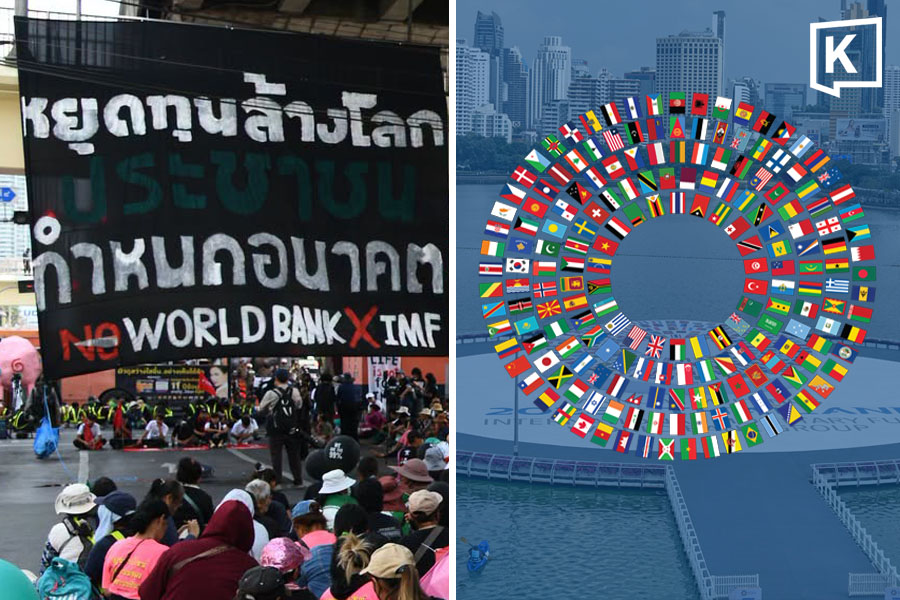
The Thai baht experienced a catastrophic collapse on July 2, 1997, marking the beginning of the Asian Financial Crisis. This economic downturn was the result of the International Monetary Fund (IMF) pressuring Thailand, along with other Southeast Asian countries, to remove barriers and liberalize global capital flows. The IMF's aggressive promotion of these policies led to rampant overinvestment in sectors like real estate and the stock market, causing profits to plummet and triggering a massive outflow of capital from these countries.
As foreign funds flooded into Thailand, the country faced an oversupply of baht competing with scarce dollars. This imbalance led to a sharp decline in the value of the Thai baht, ultimately forcing the Bank of Thailand to deplete its $38.7 billion reserve in just six months to maintain the currency's value. The exchange rate plummeted from 25 baht to the dollar to 50 baht, illustrating the gravity of the situation.
The IMF, in an attempt to stabilize the situation, provided Thailand with a $17.2 billion "rescue" fund. However, this aid primarily benefited foreign banks and investors, as it primarily involved reimbursing them for their original loans and investments. In exchange for this aid, the Thai government was required to implement an austere adjustment program, which included slashing government expenditures and raising the value-added tax (VAT) from 7% to a staggering 10%.
The IMF's recommendations further exacerbated the crisis. They advocated for the removal of all limitations on foreign ownership of Thai financial firms, accelerated privatization of state enterprises, and a revision of bankruptcy laws to align with the demands of foreign creditors. Critics argue that these reforms were primarily aimed at creating business opportunities for US firms, rather than providing genuine relief for the Thai people.
The backlash against the IMF was significant both in Thailand and internationally. Demonstrations and protests erupted, with the IMF chief, Michel Camdessus, facing ridicule when he visited Thailand in 2000. The damage inflicted by the IMF's policies was undeniable, as hundreds of office buildings and condominiums remained unfinished, businesses collapsed, unemployment soared, and over one million Thais fell into poverty within just a few weeks.
Written by urgent.news from Khaosod English's reporting — not their text. Machine-written — may contain errors; check the original before relying on it.