CalBank emerges from regulatory shackles, now positioned to lend aggressively
CalBank PLC, one of Ghana's indigenous banks, has completed a turnaround. In just a year, the Bank has gone from a lender operating under tight regulatory constraints to one positioned to pursue significant loan growth. The transformation follows a landmark capital raise in late 2025 that far exceeded expectations and transformed the bank's balance sheet.
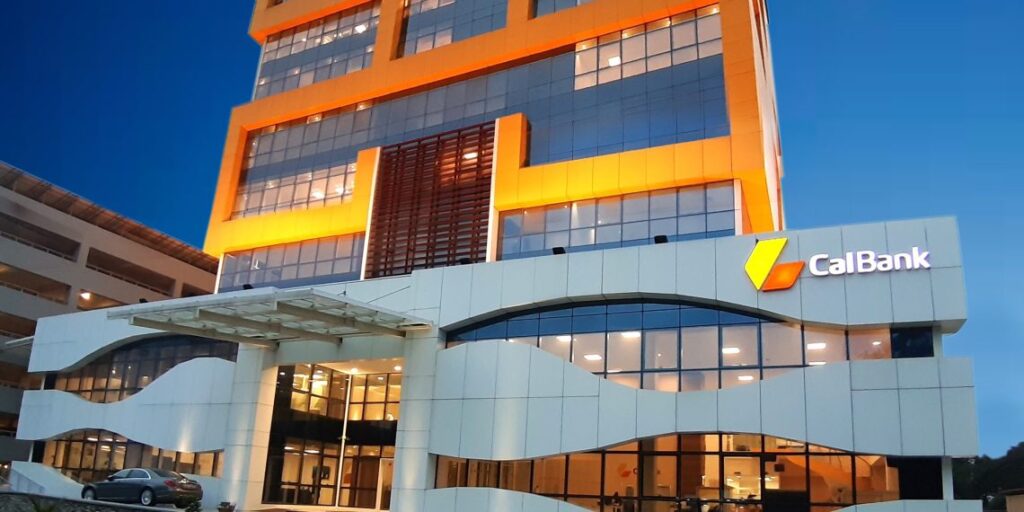
CalBank PLC, a prominent Ghanaian bank, has successfully navigated a transformation following the completion of its turnaround, as highlighted in its unaudited financial results for the nine months leading up to September 30, 2026. Within a year, the bank has evolved from one operating under strict regulatory constraints to one poised to scale up its lending activities.
The transformation came about after a significant capital raise in late 2025 that surpassed expectations, fundamentally altering the bank's financial standing. Initially, CalBank's lending capabilities were severely constrained, with its capital adequacy ratio dipping into negative territory, leading to the Bank of Ghana's Prompt Corrective Action regime.
Moreover, the bank's non-performing loans (NPL) ratio stood at 26.5%, and it faced heavy regulatory scrutiny. However, everything changed in November 2025 when the bank launched a Rights Issue and Private Placement with the target of GHS900 million, ultimately raising GHS1.164 billion, exceeding the target by 29.4%. The capital infusion ushered in swift and substantial changes, including a rise in stated capital from GHS 545.8 million to GHS 1,421.5 million, a dramatic improvement in the capital adequacy ratio from -1.6% to 18.4%, and a reduction in the NPL ratio from 26.5% to 8.5%, already below the Bank of Ghana's year-end restriction of 10%.
The Bank of Ghana subsequently lifted its regulatory restrictions once CalBank's capital position was restored, lifting the constraints that had previously stifled the bank's lending activities. Daniel Nii Kwei-Kumah Sackey, CalBank's Board Chairman, described the oversubscription as "a clear vote of confidence in Brand CalBank, its governance and its long-term strategy."
Managing Director Carl Selasi Asem emphasized that the capital injection was the "final catalyst required to trigger the renewed strategy." The bank currently finds itself in a favorable lending environment, with Ghana's average commercial lending rate at a 25-year low of 15.94% in August 2026, which is expected to spur demand for credit from businesses and households.
CalBank's strategic emphasis on corporate and retail banking positions it to benefit from this growing demand. The bank's financials for the nine months ended September 30, 2026, already indicate a renewed sense of activity, with loans and advances to customers increasing by 61% to GHS2.05 billion, customer deposits rising by 24.5% to GHS10.63 billion, and net profit for the period climbing by 39.4% to GHS321.7 million.
Net trading income saw a remarkable 185% increase, and net interest income rose by 70.6% compared to the same period in 2025. While the analysts acknowledge that CalBank is not likely to engage in wild expansion, they note that management is expected to focus on credit quality rather than merely loan growth. The report suggested that even though CalBank's retained earnings remain negative, the bank will need to continue strengthening its profitability before considering any form of shareholder return.
Managing Director Carl Asem expressed optimism, stating that "CalBank today is in a far better position than it has ever been to go out and pursue growth aggressively but responsibly." For the general public, a well-capitalized CalBank represents another lending institution operating under falling rates. Businesses will enjoy more competition for quality borrowers and potentially better lending terms.
For CalBank, the onus now lies in demonstrating that its new lending capacity can indeed lead to sustainable, high-quality growth. The bank's journey from regulatory constraint to lending freedom is now complete, but the real challenge of lending effectively has just begun.
Written by urgent.news from Joy Business's reporting — not their text. Machine-written — may contain errors; check the original before relying on it.