2 giant Ramesses II statues, one wearing a double crown, discovered by man in Egypt
The remains of two Ramesses II statues — one of which would have originally stood around 28 feet tall — were found by a villager in Egypt.
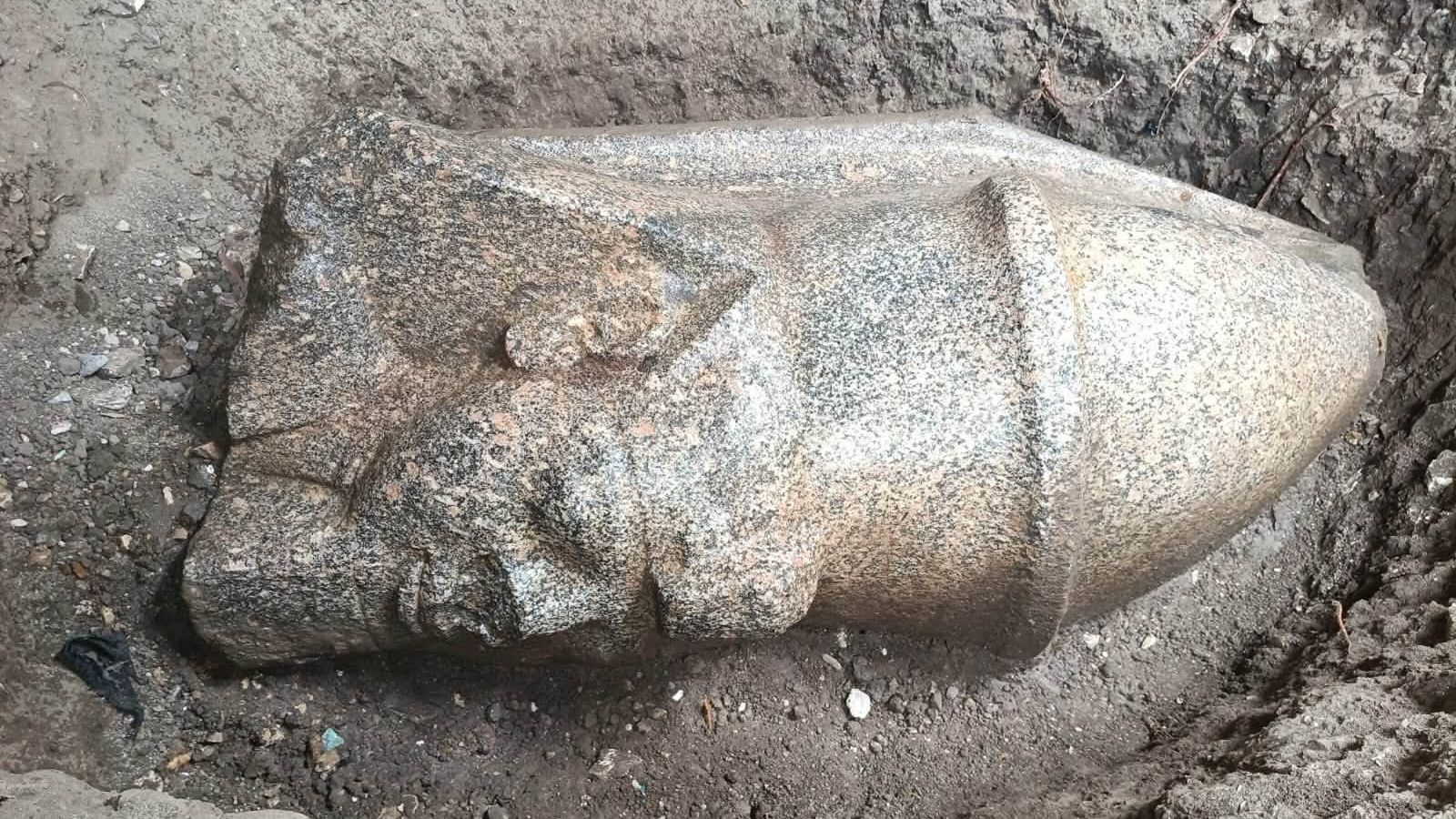
In northern Egypt, a man named Khaled el-Shahat stumbled upon the remains of two enormous statues of Ramesses II while working on his land. The Egyptian Ministry of Tourism and Antiquities was alerted and dispatched a team to excavate and study the statues in the village of Behbeit El Hagar. Ramesses II, one of the longest-reigning pharaohs in Egyptian history, ruled from around 1279 to 1213 B.C. and controlled an empire stretching as far northeast as modern-day Syria.
He initiated numerous building projects throughout the empire, and many statues of Ramesses II have been discovered across Egypt. Archaeologists had previously uncovered architectural fragments with Ramesses II's name at Behbeit El Hagar, a site known for its temple dedicated to Isis, a goddess associated with healing and magic.
Mahmoud Emam, an Egyptologist at Cairo University, noted that the newly discovered statues were found on the western side of the temple complex. Both statues were initially larger than life, with the larger one possibly standing nearly 28 feet (8.5 meters) tall when originally constructed. The larger statue's head, measuring 5.2 feet (1.6 meters) tall, depicts Ramesses II wearing the double crown of Upper and Lower Egypt.
Its back pillar features a hieroglyphic inscription with the pharaoh's Horus name, Hor-Ka-Nakht-Mery-Maat, meaning 'Strong Bull, Beloved of Right, Truth'. The second statue, approximately 7.9 feet (2.4 meters) tall, also likely portrays Ramesses II wearing the Nemes headdress, a striped headcloth worn by pharaohs. Hieroglyphs on the statue inscriptions identify Ramesses II as 'King of Upper and Lower Egypt' and 'Son of Ra', an ancient Egyptian sun god.
Written by urgent.news from Live Science's reporting — not their text. Machine-written — may contain errors; check the original before relying on it.