Wie Maroš Šefčovič der Durchbruch im Handel mit China gelang
Europas Handelskommissar hat ein erstes Zugeständnis aus Peking erreicht. Nun muss er die EU-Staats- und Regierungschefs davon überzeugen, dass der Dialog noch mehr bewirken kann.
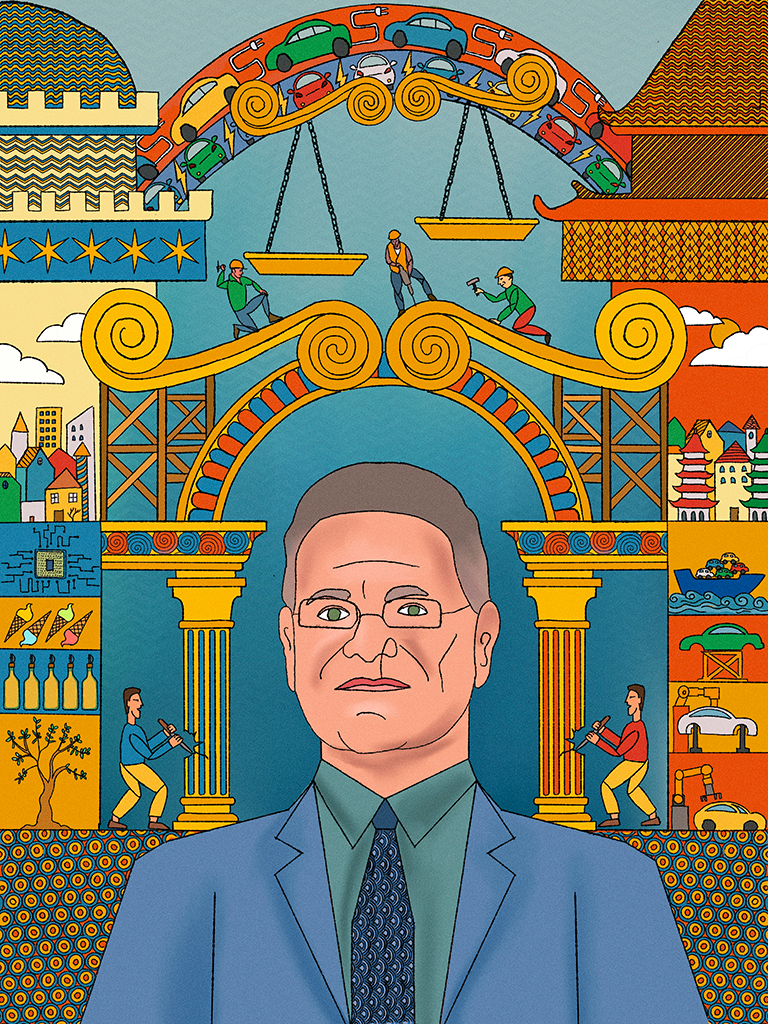
Maroš Šefčovič, the European Trade Commissioner, achieved a breakthrough in trade talks with China. To convince EU leaders that dialogue could yield more results, he secured a breakthrough in Beijing's import limits on Chinese hybrid vehicles. He achieved this by securing an agreement to limit imports to 350,000 vehicles per year within the first three months.
This modest success represents a significant concession from Beijing, a country whose auto manufacturers have flooded European markets with increasingly competitive vehicles. Šefčovič had previously negotiated a trade ceasefire with Donald Trump last year. After meeting Chinese Trade Minister Wang Wentao in Brussels in June, he agreed to focus on the automotive sector, where the EU has limited influence among few major markets still open to Chinese manufacturers. Šefčovič aimed to build trust in this sector before addressing more challenging issues like critical resources and China's massive industrial overcapacity.
Meanwhile, he worked to unite European governments behind an initiative to strengthen EU trade protection measures. The hybrid deal is only the first step in a larger competition. EU leaders meet in Brussels on Thursday to review the progress. They must decide whether to pursue tougher measures to reduce the EU's trade deficit with China, which is estimated at one billion euros per day.
The meeting will show whether Šefčovič, who has built his career on finding compromises with difficult partners, can sustain support for a strategy whose success is far from certain. Šefčovič's first move was to focus on an area where Europe still has influence: access to its market of 450 million people. Chinese manufacturers have become global powerhouses, but they struggle with weak domestic demand, exacerbated by an ongoing housing market downturn that is stressing private consumption.
Vehicle sales in China fell 28% year-over-year in September. As domestic sales decline, overseas markets gain importance. The US has excluded Chinese imports, leaving Europe as one of the most lucrative markets still open to Chinese manufacturers. Šefčovič reasoned that China would rather accept export restrictions than risk losing access to the European market.
He targeted the automotive sector, where Chinese manufacturers have made rapid strides. In 2024, Chinese auto manufacturers held only 2% of both the European hybrid and plug-in hybrid markets; by the first half of 2026, their respective shares were projected to rise to 14% and 25%. The Commission planned to restrict imports of hybrid vehicles without an agreement. Šefčovič, however, saw negotiation leverage in the potential to prove that dialogue with Beijing could yield tangible results.
Negotiations were intense, according to a source familiar with the Chinese side's account. "It was very, very hard," the person said, speaking anonymously to avoid discussing sensitive details. "Both sides had not experienced such intensity in a long time. No summer break, no holidays. They worked around the clock, even a couple of days before Šefčovič's trip to Beijing."
While Brussels sought dialogue, Beijing aimed to convince it that it was ready to take tougher measures should negotiations fail. Šefčovič had previously announced a new "Diversification Instrument" to force companies in critical sectors to secure at least three supplier inputs as a precondition for business, aiming to curb China's ability to exploit Europe's dependence on its critical resources.
Just three days before Šefčovič's trip to Beijing, France and Germany intensified their pressure. President Emmanuel Macron and Chancellor Friedrich Merz demanded a robust new trade weapon.
Written by urgent.news from Politico EU's reporting — not their text. Machine-written — may contain errors; check the original before relying on it.