Welthandel: Chinas Exporte stark gewachsen - Überschuss auf Rekordkurs
Chinas Exportmotor läuft weiter auf Hochtouren. Doch bei Chinas Handelspartnern wächst die Kritik am Ungleichgewicht. Zu einer jüngsten Vereinbarung haben Experten unterschiedliche Meinungen.
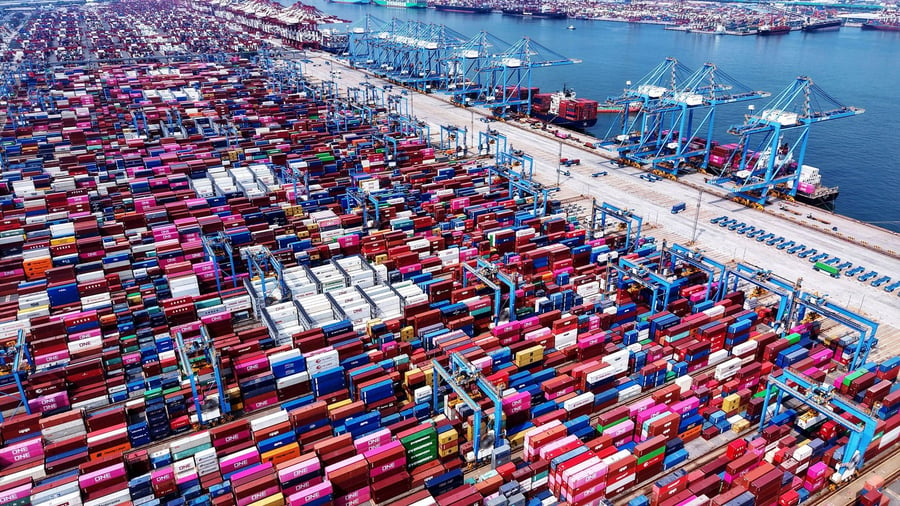
In September, China's exports experienced a significant increase of 36.3% compared to the previous year, according to the country's customs authority. This growth was driven by the artificial intelligence boom, which led to a surge in demand for semiconductors, memory media, and energy storage and transfer products. The customs minister Wang Jun stated that despite global unrest, China's resilience in foreign trade would result in continued growth of imports and exports.
For the current fiscal year, the customs agency projected that imports and exports would grow at a rate of 1.2 trillion US dollars, based on data from the first three quarters. The trade surplus in September was approximately 133 billion US dollars. China has been exporting more to Europe, with exports to Germany increasing by 31.4% compared to the previous year, while imports only rose by 0.1%.
China's exports to the EU were also higher than its imports by 25.3%. Chinese companies continue to focus on growth models driven by investments, targeting future industries such as artificial intelligence and chip technology. However, this has led to a rapid increase in debt, particularly among local governments. As a result, companies in sectors like steel, automotive, and solar are seeking new markets abroad to sell their often subsidized products at lower prices.
The EU has criticized China for distorting competition, but Beijing denies the accusations of overcapacity and the "China shock." The export growth is attributed to improved economies of scale and foreign demand for green transition and industrial development. The automotive industry is facing challenges, with China selling only 1.63 million vehicles in September, a 28.1% decrease compared to the previous year.
In response, manufacturers exported 923,000 vehicles, representing a 73.2% increase. In discussions between the EU and China, both sides agreed to adjust the import of hybrid vehicles from China, reducing the number of hybrid and plug-in hybrid cars from 302,000 to 350,000 per year over the next four years. While this may provide a short-term relief for the auto industry, it is seen as a limited adjustment to the pressure on China's export growth.
Written by urgent.news from Handelsblatt's reporting — not their text. Machine-written — may contain errors; check the original before relying on it.