‘They’re not candid snapshots of me at all’: Issy Wood on her intimate self-portraits at London's National Portrait Gallery
The British-American painter discusses her complex relationship with her face
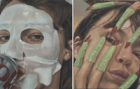
British-American painter Issy Wood, known for her figurative art, has gained international acclaim for her intimate self-portraits at the London National Portrait Gallery. Using a language influenced by Pierre-Auguste Renoir, Hannah Höch, and John Stezaker, Wood's self-portraits challenge the genre and explore her relationship with her appearance, stereotypes, and societal gazes. Eleven of these self-portraits have been displayed at the gallery to launch the new Artist Focus strand.
Wood's dislike of being photographed and her self-perception as someone who "hates" her face led her to create over 80 self-portraits using camera phone selfies. She describes these portraits as seductive and troubling, as they don't accurately represent her. Wood's self-portraits often involve playing with stereotypes and societal gazes, creating a complicated relationship with the viewer. While some portraits seem performatative, others are more introspective.
The artist does not see these self-portraits as candid snapshots; instead, she views them as consensual images, carefully crafted with numerous decisions. She emphasizes that these paintings offer a degree of introspection, but not always. Some portraits may not carry as much weight as an average selfie, while others could provide profound insights into her self-image. Clocks and watches feature in some of Wood's paintings, including her self-portraits, suggesting her contemplation of time as a theme.
Wood acknowledges the weight of art historical tradition and the dialogue between her work and the history of Western portraiture. However, she feels she has found a way to make peace with this aspect of her art. The National Portrait Gallery's acquisition of her early self-portraits has given her a sense of validation and a feeling of being part of a larger art world, even if it initially gratified her family.
Written by urgent.news from The Art Newspaper's reporting — not their text. Machine-written — may contain errors; check the original before relying on it.