‘There is no magic’: IMF says U.S. and other nations must ‘go in a direction of tightening’ global debt as economic growth can’t ‘deliver fast enough’
Meanwhile, rising bond yields, reflecting higher premiums demanded by investors for taking on greater risk, have been disrupting financial markets.
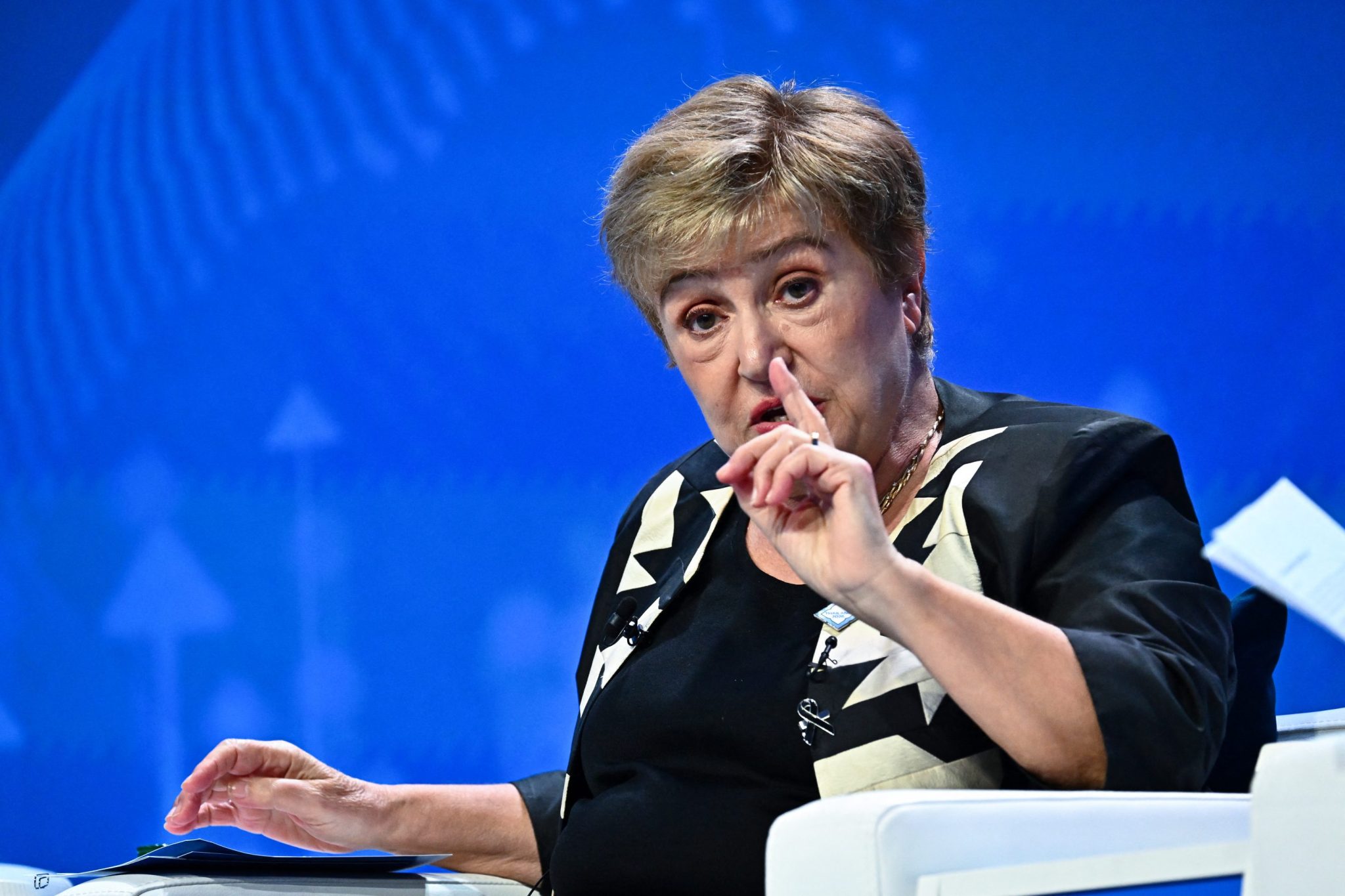
The head of the International Monetary Fund (IMF), Kristalina Georgieva, has stated that U.S. and other wealthy nations must take urgent action to address the mounting global debt levels. These debts are particularly burdensome for low-income countries, straining the global financial system. IMF Managing Director Georgieva emphasized that while economic growth can help, it is not sufficient to quickly resolve the issue of more than $40 trillion in national debt.
Rising bond yields, driven by higher premiums demanded by investors for increased risk, have disrupted financial markets, Georgieva noted.
Georgieva reiterated that "there is no magic" in terms of a quick fix, suggesting that other measures are needed. Specifically, she advocated for a "tightening" approach, where deficits are reduced and debt levels are brought under control. Rising global debt levels, compounded by inflation exacerbated by high energy costs due to the Iran war, have pushed interest rates to multi-decade highs.
This has placed additional burdens on the world's poorest nations, whose interest payments have reached all-time highs relative to their revenue. The IMF's Fiscal Monitor highlighted that the Global South is paying the price for rising interest rates in wealthier countries. The U.K. Foreign Secretary Ed Miliband echoed these concerns, calling for a new approach to debt that provides developing countries with more favorable terms and longer repayment horizons.
The IMF's Fiscal Affairs Department, in collaboration with other experts, has warned that efforts to consolidate debt have faced challenges, especially after heavy spending during the COVID-19 pandemic. Rodrigo Valdes, director of the IMF's Fiscal Affairs Department, stated that "fiscal risks are rising, and a proper reaction is largely absent in many countries." This challenge extends beyond individual nations and impacts the broader global economy.
Experts such as Alexander De Croo, former Belgian prime minister and administrator of the UNDP, have highlighted the disproportionate financial impact on developing countries. They pointed out that the median developing country pays three times more in interest than developed countries and that nearly 10% of government spending goes towards debt repayments.
High fuel and fertilizer prices, along with the effects of the El Niño weather phenomenon and rising borrowing costs, have left many low-income countries with limited room for recovery. De Croo emphasized the urgency of the situation, stating that there is no clear path forward.
In response to these challenges, the UNDP has launched the "Jobs for Prosperity" initiative, aiming to attract investment in sectors like tourism, healthcare, and food processing to create new job opportunities. This initiative, along with related efforts, seeks to strengthen governance and policies to make countries more attractive to investors.
The IMF, Bank of Thailand, and World Bank Group also announced a "Bangkok Blueprint" on Wednesday to combat cybercrime, financial fraud, and online scams, following recent cyberattacks that disrupted businesses in France.
Written by urgent.news from Fortune's reporting — not their text. Machine-written — may contain errors; check the original before relying on it.