The Painful Paradox of European Rearmament
Militarizing now may require even further militarization down the line.
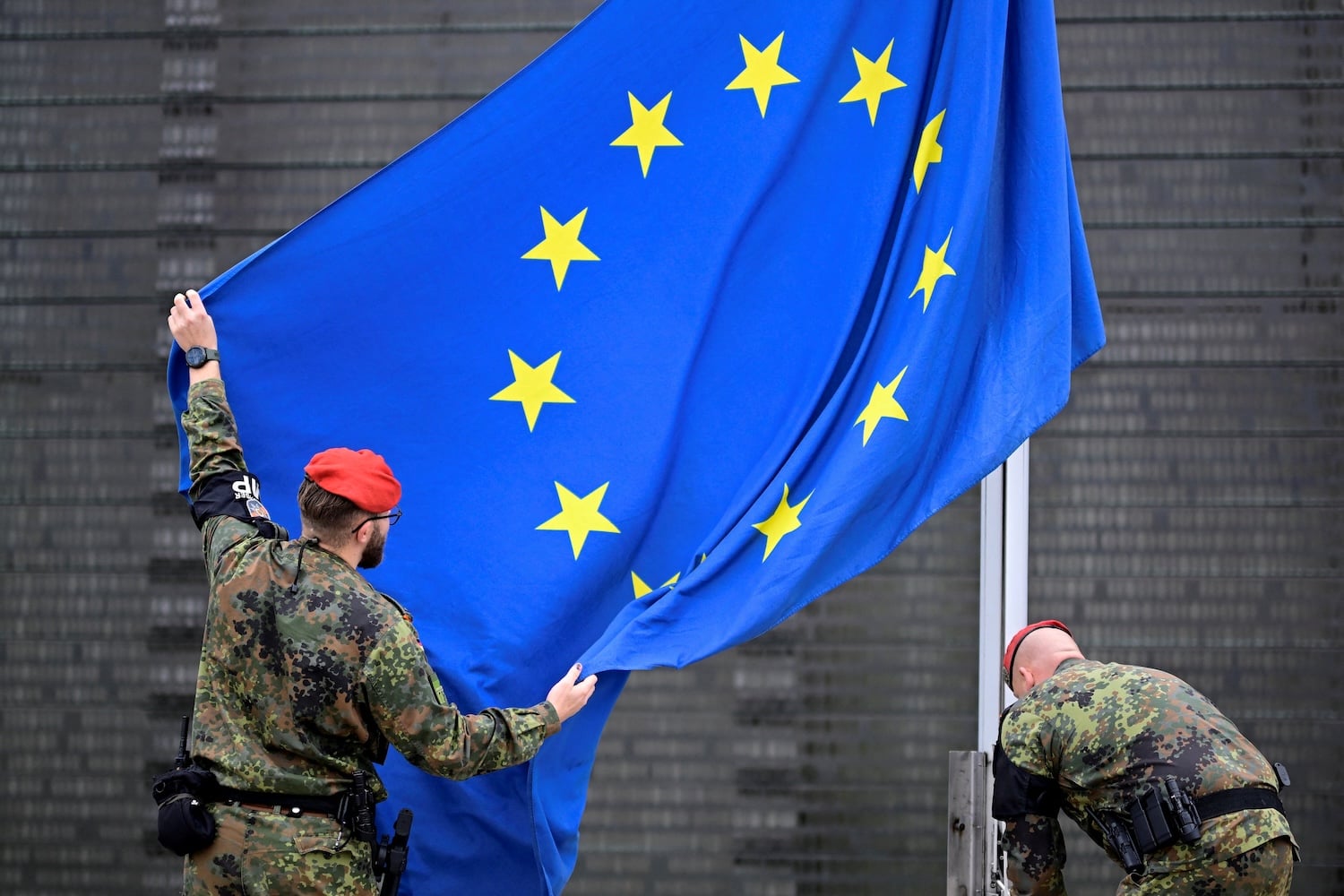
The European Union's newfound commitment to rearmament has startled the world, revealing a painful paradox in the continent's quest for security. After the Russian invasion of Ukraine and its subsequent acts of hybrid warfare, European countries have come to realize the importance of hard military capabilities over civilian power.
The process of rearmament began in 2022, as Sweden and Finland joined NATO and Germany shifted its security policy. Since then, most European states have formulated ambitious plans to bolster their military strength.
The U.S. Trump administration's hostile stance towards the European Union, a gradual reduction in U.S. military presence on the continent, and President Trump's preference for Russia over Ukraine have further emphasized the need for greater European capacity. While some states, such as those close to Russia, are more visibly alarmed, others, like Portugal and Spain, show less of a sense of urgency.
Even far-right parties like the Alternative for Germany remain sympathetic to Moscow, while France's National Rally has become more critical of Russia's actions toward Europe.
However, this renewed focus on defense comes with its own set of challenges. Strengthening one's security can be costly, counterproductive, and occasionally dangerous. While it may deter or defeat an adversary, it can also reinforce the very fears that led Russia to engage in objectionable activities. The seizure of Crimea in 2014 and the invasion of Ukraine in 2022 were, in part, responses to Western actions that many Russian political elites viewed as threatening.
While the European Union and the United States have responded vigorously to this violation of international norms, Russia's initial blunders and Ukraine's resistance have transformed a seemingly easy coup into a protracted, costly, and escalating war of attrition.
This situation exemplifies the security dilemma at work. Each side believes it is acting from defensive motives, yet perceives the other's behavior as unjustified and evidence of dangerous revisionist ambitions. This action-reaction cycle, described by Robert Jervis as the "spiral model," can lead to further escalation and expansion.
Although the risk of an all-out war in Europe may be low, the potential for a wider conflict should not be dismissed. Even if a standoff between Russia and its neighbors remains armed, the consequences could be severe.
Written by urgent.news from Foreign Policy's reporting — not their text. Machine-written — may contain errors; check the original before relying on it.