Ta Kon Citadel in Vinh Son, Vietnam
Hidden deep within the remote mountains of Vinh Son, Ta Kon Citadel looks at first glance like the forgotten ruins of a colossal ancient fortress swallowed by the primeval jungle. The geological centerpiece is a massive stone wall stretching 500 to 600 meters along the mountainside and towering up to 40 meters high. Composed of rectangular, hexagonal, and polygonal stone columns packed so tightly…
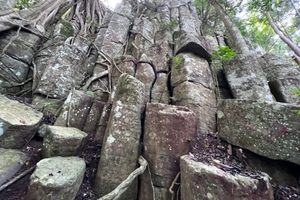
Amidst the dense, untamed forests of Vinh Son lies the enigmatic Ta Kon Citadel. At first glance, this seemingly ancient fortress blends seamlessly into the primeval jungle, appearing as if swallowed whole by nature. The most striking feature of this geological wonder is a massive stone wall, stretching an impressive 500 to 600 meters along the mountainside.
Towering up to 40 meters high, the wall is composed of intricately arranged stone columns, appearing as though they have been painstakingly carved by human hands. These columns come in various shapes - rectangular, hexagonal, and polygonal - fitting together so tightly that they give the illusion of a meticulously constructed structure.
The sheer craftsmanship of these stone blocks, juxtaposed against the rugged terrain, creates a striking visual paradox. Overgrown with lush green moss and ancient tree roots, the geometric stone blocks seem to be a symphony of nature’s artistry. In the Bahnar language, Ta Kon translates to "massive stone blocks forming a rampart," and this site is deeply embedded in local indigenous folklore, later morphing into a strategic stronghold during historical resistance movements.
Witnessing the moss-covered stone wall from close proximity offers a humbling glimpse into a fortress that was built not by human hands, but by the very forces of nature over millennia.
Written by urgent.news from Atlas Obscura's reporting — not their text. Machine-written — may contain errors; check the original before relying on it.