Sachsen-Anhalt: „Explosives Regierungsgemisch“ – Forscher warnen vor schwer kontrollierbarer AfD-Fraktion
Die AfD könnte in Sachsen-Anhalt bald regieren. Doch bestimmte Abgeordnete könnten eigene Wege gehen und die Regierung ausbremsen, zeigt eine Analyse des Instituts der deutschen Wirtschaft.
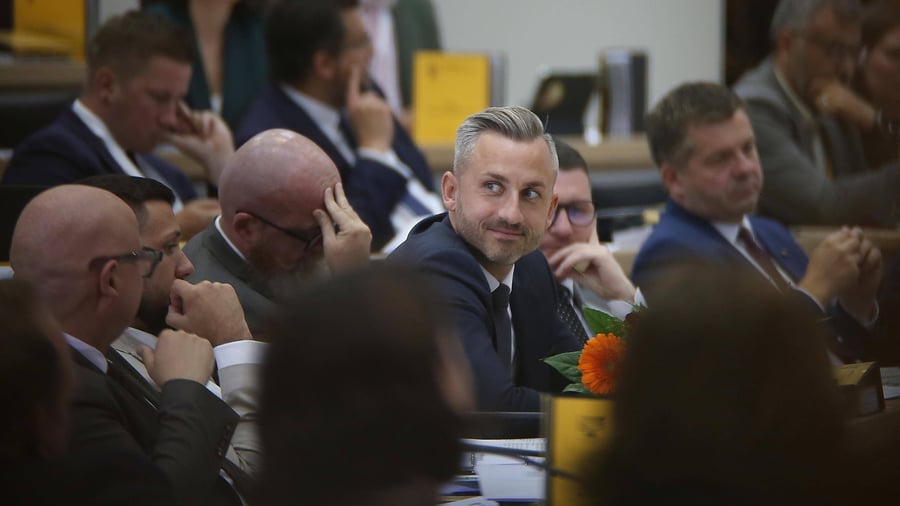
The German Institute of Economic Research (IW) has issued a warning about potential conflicts in a hypothetical AfD government in Saxony-Anhalt. The main concern is the presence of hard-to-control lawmakers, as identified by IW researchers Knut Bergmann, Matthias Diermeier, and Dan Muncaster in their analysis titled "Direct Mandates: When the Besenstiel Wins the Election." Diermeier stated on LinkedIn, "When the proverbial besenstiel (the broomstick) wins the election, the most radical candidates emerge."
These radical candidates may appeal to the grassroots but show little interest in the necessary compromise-making required for government. This situation poses a risk of instability, as Diermeier aptly put it, "That is explosive material." The AfD, which secured 43.8% of the votes in the Landtag election on September 6th, emerged as the strongest force in Saxony-Anhalt, but fell short of the absolute majority with 39 out of 83 seats.
Party leader Ulrich Siegmund announced his intention to seek the position of Minister-President in December. To achieve an absolute majority, he would need at least 42 votes.
The AfD's direct mandate candidates often garner support primarily within their respective constituencies rather than through the party's national list. This can make it difficult for the party to maintain discipline among these lawmakers. Notably, five of the directly-elected AfD politicians did not even stand on the party's national list, effectively having the "beacon" effect working in their favor.
Like in Mecklenburg-Vorpommern, where 22 out of 32 AfD lawmakers were directly elected, these direct mandates could potentially create conflict within a government, as seen in the 2025 Bundestag election results.
Written by urgent.news from Handelsblatt's reporting — not their text. Machine-written — may contain errors; check the original before relying on it.