Richard Dadd’s Strange and Delicate Worlds
Known primarily for his work of fantastical landscapes and mystical woodland creatures, a new retrospective tells the full story.
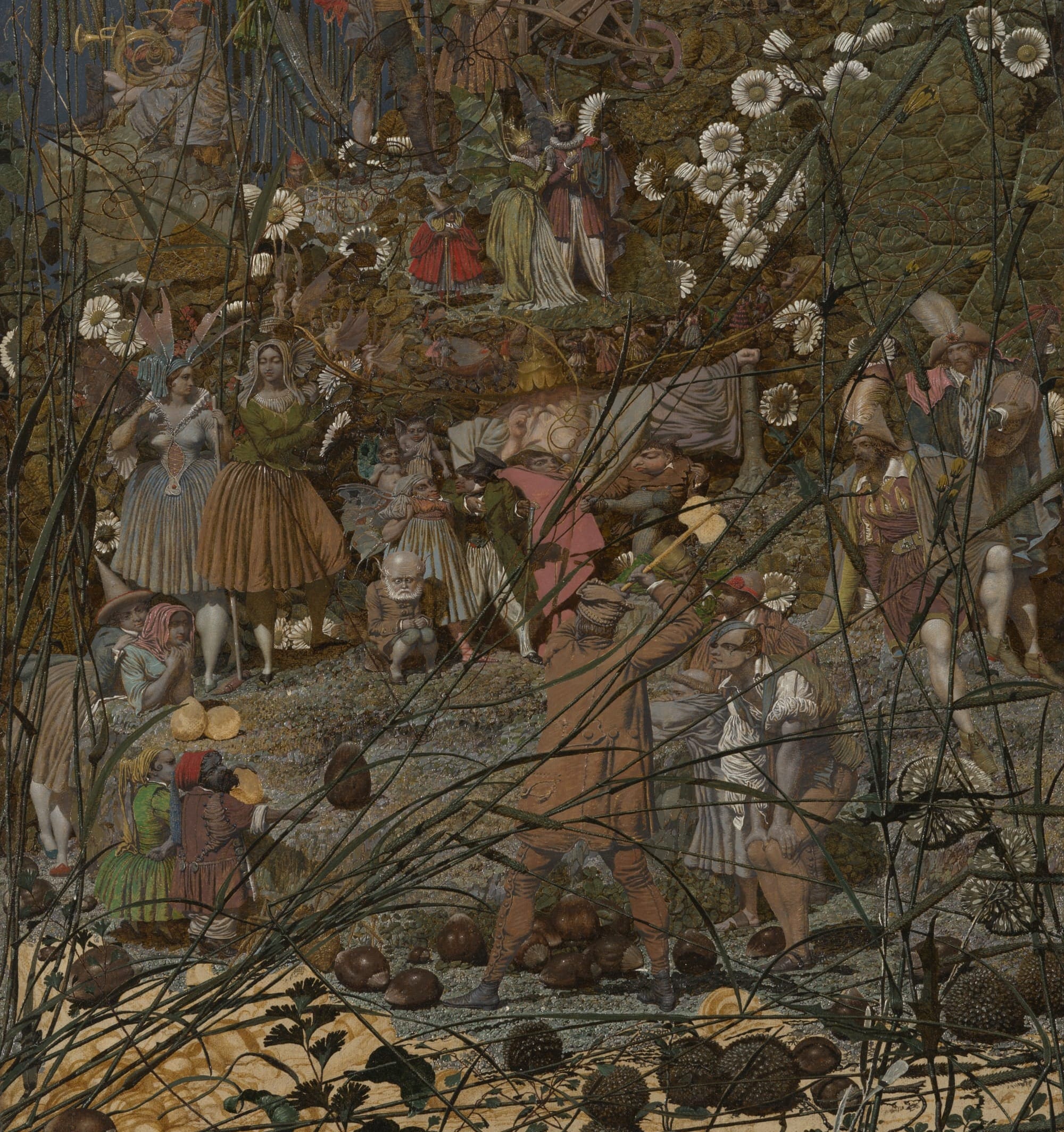
LONDON — Most British audiences recognize Richard Dadd through his painting "The Fairy Feller's Master-Stroke," characterized by its chaotic composition and the portrayal of a man afflicted with mental illness. This artwork, part of Tate Britain’s permanent collection and featured in the Royal Academy of Art’s retrospective exhibition, "Richard Dadd: Beyond Bedlam," was created between 1855 and 1864 while Dadd was confined at Bethlem Royal Hospital.
The piece is adorned with intricate, fantastical figures and fairies, interlaced with an endless pattern of flowers and grass blades that intersect its surface. Born in 1817 in Chatham, England, Dadd rose to prominence during the Victorian era and studied at the Royal Academy art schools. He was considered a prominent member of a group known as The Clique, alongside artists like Augustus Egg and William Powell Frith.
However, Dadd's life story is primarily defined by his mental health struggles, which became evident during a European journey to Greece, Turkey, and Syria as a draftsman and culminated in a delusional incident in 1843 where he murdered his father and escaped to France. Following his arrest and return to England, he was institutionalized at Bethlem Hospital’s criminal division.
Despite his detailed and unique artistic contributions, Dadd's work is largely absent from the traditional art historical narrative. The Royal Academy's exhibition of Dadd's career refrains from classifying his art as outsider art and recommends visiting the Bethlem Museum of the Mind for additional medical and historical context regarding his time at the hospital.
Written by urgent.news from Hyperallergic's reporting — not their text. Machine-written — may contain errors; check the original before relying on it.