Researchers use AI to design proteins that cut up other proteins
AI design tools make proteins that break bonds that are stable for hundreds of years.
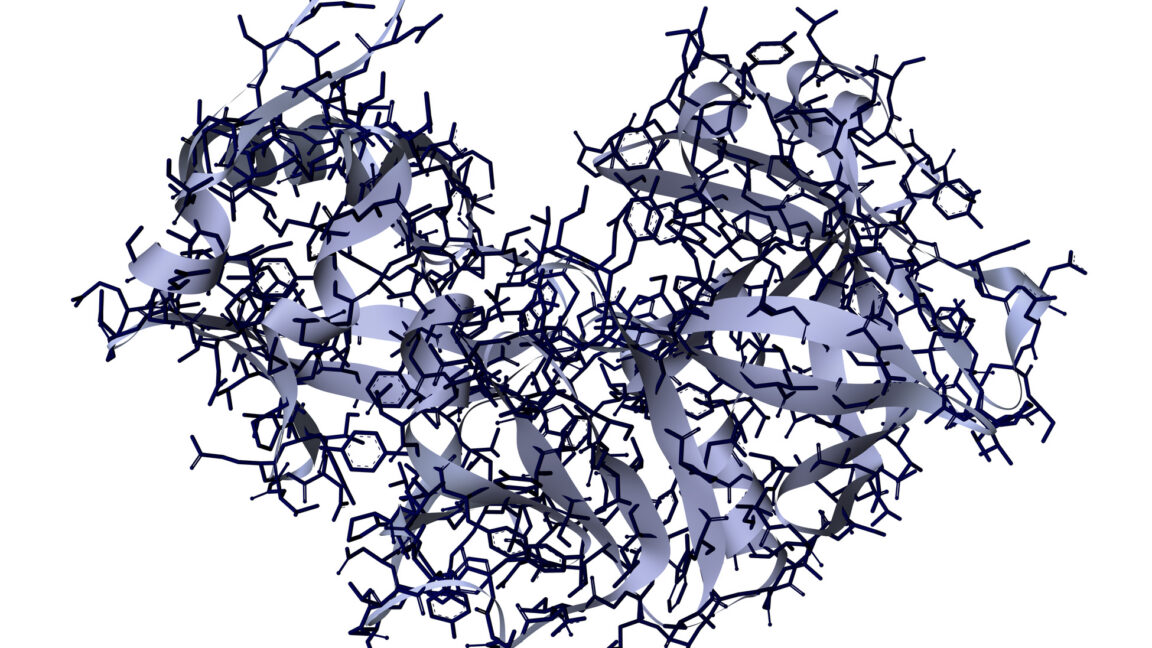
Proteins, composed of amino acids linked by peptide bonds, typically lack stability on their own. Despite their half-life of hundreds of years in ideal conditions, they degrade rapidly in Earth's environment. Organisms have evolved a variety of protein-digesting enzymes, known as proteases, which efficiently break down peptide bonds.
Researchers have now employed AI-based protein design tools to expedite the process by replicating the catalytic core of two protease types while discarding the rest of the protein sequence. The resultant enzymes can be fine-tuned to cleave specific proteins, as demonstrated by their successful application in breaking down proteins linked to neurological conditions.
The fundamental peptide bond, formed by linking an amino group to an acid group, releases a water molecule and is relatively unremarkable. Amino acids possess both an amino and an acid group, enabling them to form peptide bonds on either side of the molecule. This structural arrangement is crucial for constructing the lengthy chains found in proteins, with distinctive side chains contributing to the specific properties of each amino acid backbone.
Written by urgent.news from Ars Technica Science's reporting — not their text. Machine-written — may contain errors; check the original before relying on it.