Modi’s Crackdown Is a Strategic Error
The violent escalation is deepening public anger in India as voter list protests grow.
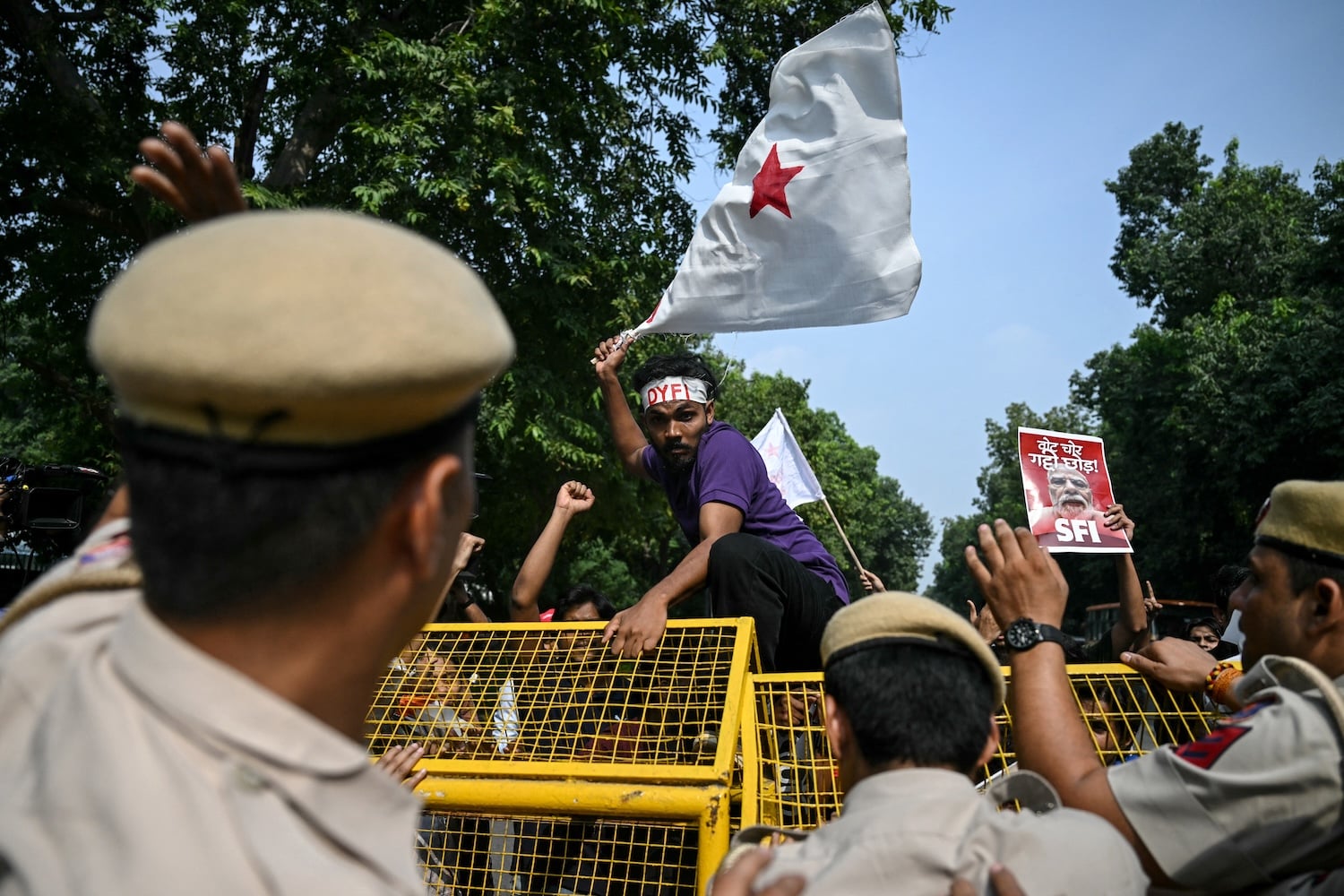
Recent events in New Delhi have sparked comparisons to past security crackdowns in South Asia, reminiscent of military dictatorships clamping down on dissent. On October 10, Indian security forces targeted thousands of protesters who gathered to voice their discontent over the removal of over 130 million names from voter rolls. Over 7,000 individuals were detained, including opposition politicians, former chief ministers, student leaders, senior lawyers, and journalists, who were protesting the removal of names under the Special Intensive Revision (SIR) process initiated last year.
Authorities responded to the protest by shutting down 57 metro stations, canceling trains, and suspending mobile internet services, deploying more than 30,000 paramilitary troops to control the capital. The excessive use of force against demonstrators, including members of Parliament, has been widely documented online. Despite the crackdown, the protests continued to gather momentum, fueled by a youth-led movement, and evolved into a broader referendum on Prime Minister Narendra Modi's governance.
Confronted with political fatigue, a declining economy, and foreign policy setbacks, Modi's government has resorted to state coercion instead of engaging in political dialogue. The immediate demand of the protests, which have spread to other major cities, is the resignation of the Chief Election Commissioner, nominated by Modi. The government's heavy-handed approach risks radicalizing citizens and eroding Modi's democratic legitimacy.
Written by urgent.news from Foreign Policy's reporting — not their text. Machine-written — may contain errors; check the original before relying on it.