Mark Carney told middle powers to grab a seat at the geopolitical table. The private sector got there first
Private firms—not states—are writing the rules of the AI era.
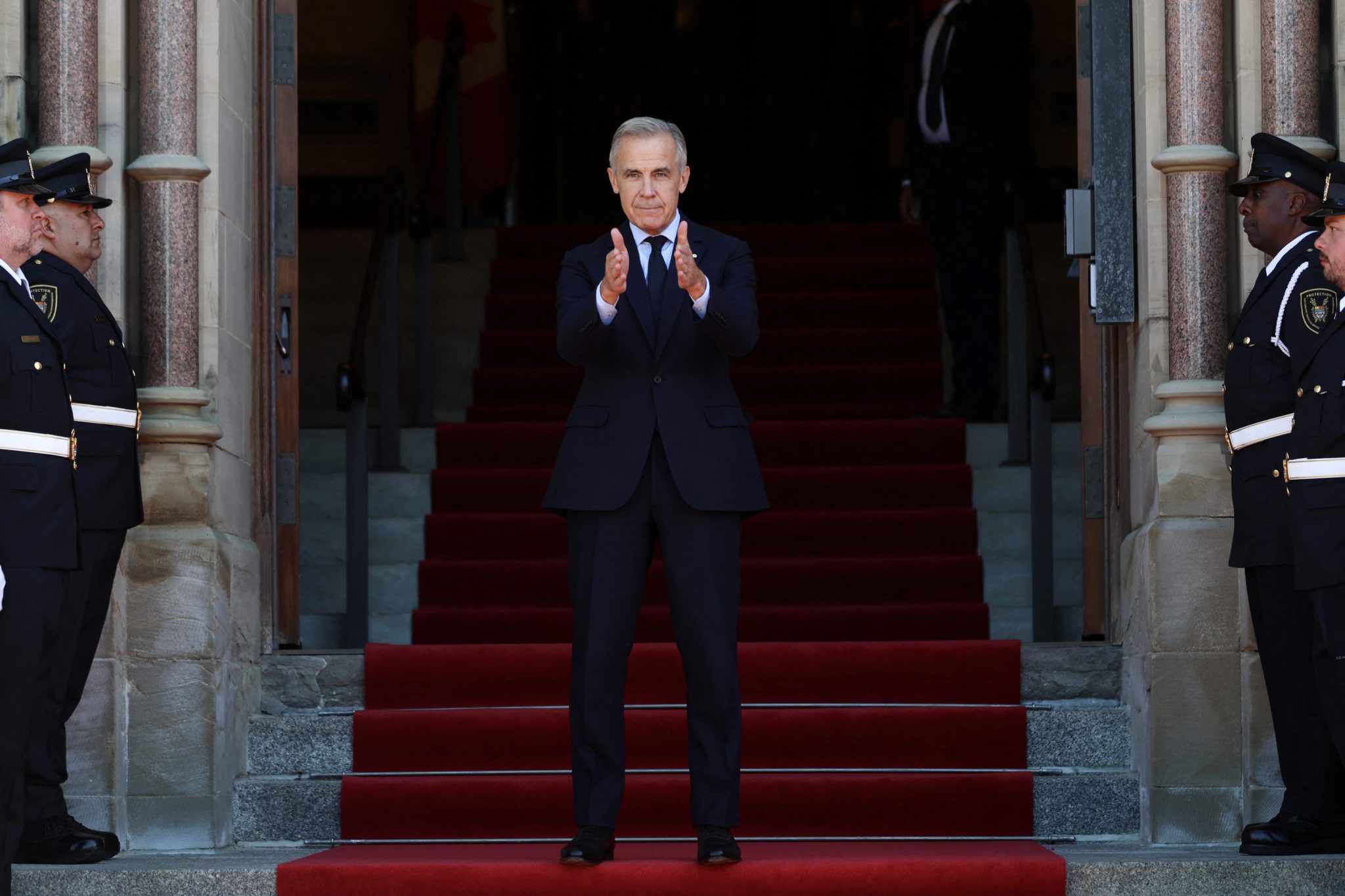
Mark Carney, the former governor of the Bank of England, urged middle powers to "get at the table" or face "being on the menu" at the World Economic Forum in Davos in January. This call for middle powers to take a more prominent role in global affairs has gained traction, but a new report suggests that the movement is misguided.
The authors argue that the middle powers argument assumes that nation-states remain the primary actors in great-power competition, a notion that is flawed. In fact, the competition ahead will be driven by private-sector actors who are already pursuing global power. Private-sector companies, such as Nvidia, Apple, Amazon, and Taiwan Semiconductor Manufacturing Company, have a market capitalization that surpasses that of many nation-states, indicating their growing influence.
Biotech firms, too, played a crucial role in developing and distributing the mRNA vaccines that helped end the COVID-19 pandemic. The electronics and innovation sectors are largely run by the output of companies like Taiwan Semiconductor Manufacturing Company. In the realm of artificial intelligence, private firms have already established themselves as geopolitical actors.
State actors are increasingly relying on non-state technology firms for capabilities that were once exclusive to national agencies. Companies like SpaceX, Blue Origin, and AI safety company Anthropic are already leading the way in AI development and deployment. The private sector's presence in AI is evident in their involvement in space exploration, satellite networks, and cyber operations.
In fact, Anthropic's September threat report identified cases of misuse or attempted misuse of its Claude model by malicious actors, including a cyber operation targeting a Southeast Asian government agency and the development of an autonomous kamikaze drone swarm. This rise of private sector actors in geopolitics is not a sign of national dominance but rather the dawn of multi-stakeholder geopolitics.
Middle powers are arriving late to the table, having missed the opportunity to set the rules of engagement in AI and global affairs. With only U.S. and China leading in AI model development, middle powers are not well-positioned to exert geopolitical leverage in this emerging world. Instead, it will be private sector actors and national leaders in the U.S. and China who will shape the next global system.
Written by urgent.news from Fortune's reporting — not their text. Machine-written — may contain errors; check the original before relying on it.