Malaysia seeks Euro tech, talent and jobs as FTA deal nears June 2027 target
KUALA LUMPUR: Malaysia must turn European investments into a catalyst for technology transfer, skilled job creation and stronger local industries as it seeks to move up the global value chain amid intensifying US-China competition, economists said.
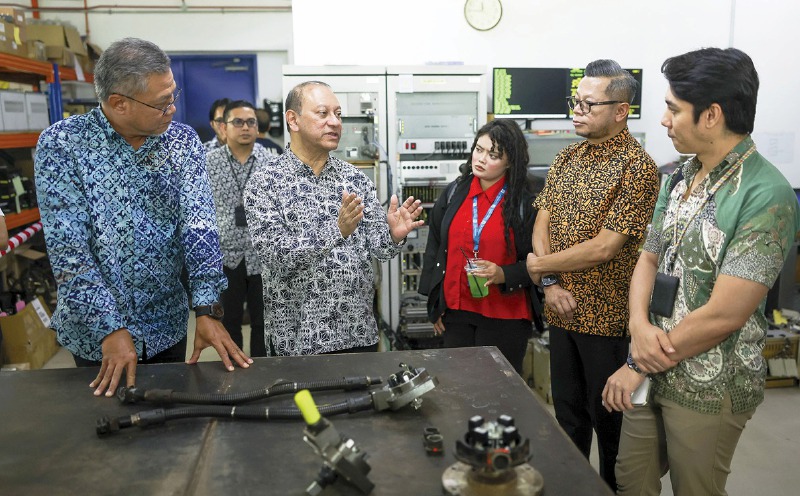
KUALA LUMPUR: Malaysia is aiming to convert European investments into higher technology transfer, skilled job creation, and stronger domestic industries as it competes against the US and China. Experts say more is needed than simply attracting foreign capital; they pointed to the need for Johari Abdul Ghani's remarks. The minister highlighted Malaysia's focus on technology transfer, skilled talent development, and better-paying jobs as the country advances economically.
He emphasized shifting emphasis to the quality and long-term value of foreign investments, moving beyond participating in global value chains to capturing and creating more value domestically. Economists stress the importance of stronger links between multinational corporations and local suppliers, especially small and medium enterprises (SMEs), along with targeted incentives and skills development.
EU-Asean Business Council director Chris Humphrey believes Malaysia can leverage its current appeal to foreign direct investment (FDI) to draw more European companies. The recent NXP Semiconductors investment underscores Malaysia's attractiveness. However, maintaining this appeal depends on improving market access and long-term investment certainty.
Humphrey believes a high-quality, comprehensive Malaysia-EU FTA would be crucial. A good deal could open new sectors, remove trade barriers, and provide long-term investment certainty. While an FTA may attract more European capital, Universiti Teknologi Mara lecturer Dr Mohamad Idham Md Razak stresses the need for complementary policies.
Investment incentives should target skilled local workers, domestic supplier development, workforce training, and collaboration with Malaysian educational institutions. The government should also strengthen technical and vocational education and training to prepare local talent for higher-skilled positions. Idham suggests the Malaysia-EU FTA could attract higher-quality investments by improving market access and regulatory predictability, but its effectiveness depends on complementary measures such as stronger intellectual property protection, efficient customs procedures, clearer investment regulations, and better financing for SMEs.
Dr Azmi Hassan, a senior fellow at Nusantara Academy for Strategic Research, says Malaysia's push for higher-value investments reflects a shift from focusing on low-cost labor to attracting sophisticated investments in areas like AI and green technology. The country is strengthening infrastructure to support these industries, including data centers.
The Malaysia-EU FTA could further bolster Malaysia's appeal to European investors, particularly in advanced technology and AI, helping the nation transition from attracting capital to building stronger domestic capabilities.
Rewritten by urgent.news; may contain errors — check the original.
Source: nst.com.my