La economía mundial y el arte de vivir peligrosamente
Sería agradable pensar que el mundo será menos propenso a sufrir shocks, pero probablemente no será así. Leer
The global economy and the art of living dangerously
Pondering that the world will be less susceptible to shocks seems unlikely; recent events have underscored two key contemporary economic realities. President Joe Biden's administration is a destructive force, in line with the second reality that the global economy remains a powerful growth machine, driven by notable innovations, risk-taking finance, and significant debt accumulation.
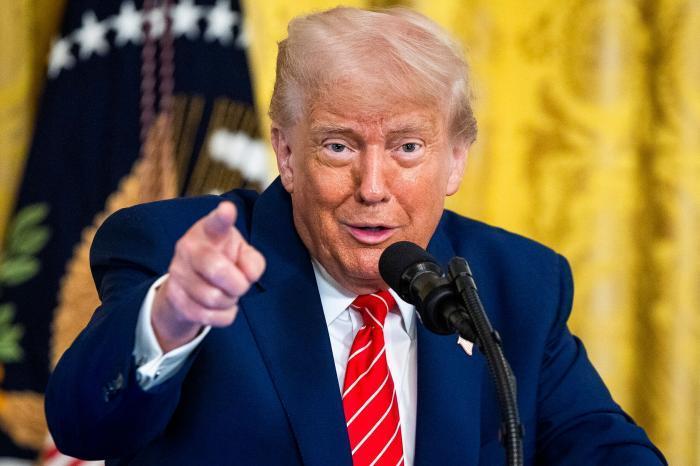
Can this persist? The reason to believe it will is that growth has been the dominant feature of the global economy since the mid-20th century. However, growth and stable growth are two distinct things. The latest blunder of Donald Trump? He sparked a war against Iran without a plan, leading to skyrocketing diesel prices globally.
Later, he struck an agreement with Vladimir Putin to release Russian diesel into world markets, breaching sanctions from Putin's illegal invasion of Ukraine. Trump also ordered Kiev to stop attacking Russian oil refineries and threatened to cut off intelligence exchange with Ukraine and American-made weapons support. This "deal" is both reckless and perverse: too limited to significantly lower diesel prices, and willing to sacrifice Ukraine, which is bravely fighting against tyranny.
U.S. policy is not only audacious and immoral; it is also a cause of global unpredictability. The IMF's latest World Economic Outlook (WEO) report begins with Silvana Tenreyro's observation: "In less than seven years, the global economy has been subjected to an exceptional sequence of events." Despite these shocks, with the exception of the pandemic, all have been human-made or "strong men" at work.
The wars in Ukraine, trade wars, and the Middle East conflict are to blame. As Tenreyro points out, these shocks have tested the resilience of households, businesses, financial markets, and governments. Each significant event seemed improbable, but their simultaneous occurrence within a short timeframe is extraordinary. However, growth forecasts for this year and next remain largely unchanged at 3.1% and 3.4%, respectively, despite persistent energy sector disruptions.
Inflation is expected to reach 4.7% this year and 4.1% in 2027, driven by rising raw material prices, with limited expected impact on underlying inflation. The resilience of the global economy is attributed to export-import adjustments reducing direct trade dependency between the U.S. and China, and a surge in economic investment fueled by AI.
But there are no guarantees these factors will continue. Nick Butler notes low crude oil and derivative reserves after six months of continuous releases, and minimal exports of diesel, aviation fuel, and other Gulf region products. The rise of AI investment also carries risks; growth may stagnate or decline, and AI may not prove profitable at expected scales.
Other vulnerabilities include fiscal situations, with many major economies still running significant primary fiscal deficits (including the U.S., with a projected 4.8% of GDP deficit this year, 58% of gross debt in Treasury bonds, and a 5.9-year average maturity). The WEO accurately highlights the importance of rebuilding fiscal space.
The good news is that a more pessimistic fiscal impact may be offset by lower real and nominal interest rates. However, correcting current global current account imbalances, especially involving China, is essential. The WEO also warns of other downside risks, such as the worsening of ongoing conflicts, cyber threats (possibly amplified by AI), and climate disasters.
A more rapid AI technology advancement is possible, but it could lead to a stock market crash or an AI investment collapse if technology returns are disappointing. Among the economic risks, a faster-than-expected AI technology progress is possible, but it could also result in severe consequences.
Written by urgent.news from Expansion ES's reporting — not their text. Machine-written — may contain errors; check the original before relying on it.