Japan-controlled tankers return to Middle East after months away
Over more than seven months of conflict in the Persian Gulf, Japan's risk-averse tankers have stayed away, but that appears to be changing.
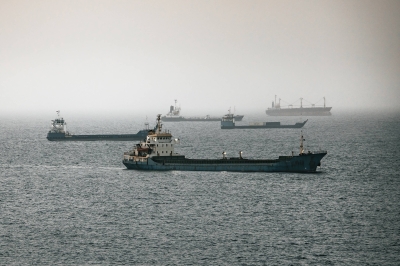
Japan-controlled tankers have returned to Middle Eastern waters after a seven-month absence, marking a tentative but significant recovery for the region's oil trade. This development comes at a time when freight and logistics costs have escalated, prompting a reassessment of transportation strategies by Japan's cautious refiners and shipowners.
Following the war in February, Japanese entities largely avoided the Persian Gulf, instead relying on alternative routes such as ship-to-ship transfers off the Indian coast and in Southeast Asia. These measures helped minimize exposure to risks while maintaining cargo deliveries, albeit at a higher cost and with potential inefficiencies.
Recent ship-tracking data reveals a shift in behavior. The Idemitsu Maru, a supertanker owned by Idemitsu Kosan, recently arrived in Japan with a cargo of Omani crude loaded in Mina Al Fahal in early September. Another Idemitsu-controlled vessel, the Apollo Energy, has departed from Fujairah for Japan carrying Murban crude. Additionally, at least two more large crude carriers under Japanese ownership are anticipated to reach Al Fujayrah in the coming days to collect Japan-bound supplies.
Despite these returns, none of the vessels have crossed into the Persian Gulf itself. Idemitsu has not changed its stance on dispatching vessels through Hormuz, stating that it aims to ensure stable crude oil procurement and safety.
Japanese stakeholders are increasingly utilizing ship-to-ship transfers within Middle Eastern waters, a trend that began in small quantities in August and grew to nearly 3.7 million barrels by early October. This selective return, rather than a full-scale shift into riskier waters, underscores a balance between safety considerations and transport efficiency, according to Hidenori Watanabe from the University of Tokyo Graduate School.
Factors driving this change include lower costs associated with direct transits, which can circumvent extra fees and delays. For Japan, which imports 93% of its crude oil from the Middle East, enhancing control over transfers is crucial for energy security. Japanese refineries are specifically designed to handle medium-sour and light crude grades prevalent in the region.
Rewritten by urgent.news; may contain errors — check the original.
Source: japantimes.co.jp